
Here's the thing about desensitization
You're not going to numb yourself into oblivion by using a lemon vibrator regularly. That's the headline, and it's worth leading with because it's the anxiety that keeps a lot of people stuck in this weird middle ground where they want to use a clitoral vibrator but feel vaguely guilty about it. Let's clear this up first: regular use of air-suction technology like the Lem doesn't create the kind of lasting desensitization that people worry about. But there is a real phenomenon happening, and understanding it changes how you use the tool.
Desensitization is real, but it's temporary, and it's mostly about expectation.
What actually happens when you use a vibrator frequently
Your nerve endings don't permanently stop responding to stimulation. That's the science part. But your brain does adjust to repeated stimuli. This is called habituation, and it's a completely normal neurological process. When you introduce the same sensation over and over, your nervous system essentially becomes efficient about it. It's not fatigue. It's adaptation.
Here's the distinction that matters: if you use a lemon vibrator every single day at the same intensity for weeks on end, you might notice that it takes slightly longer to reach orgasm, or that pattern 5 feels less shocking than it did on day one. That's habituation. It's not damage. It's your nervous system saying, "I've catalogued this sensation now." The moment you take a break, or switch patterns, or change the angle, sensation returns to baseline almost immediately.
The research on vibrator desensitization is surprisingly thin, but what exists suggests that people who use vibrators regularly report sustained pleasure over years of use. They adapt their approach, but they don't lose the ability to feel. The Lem works through air-suction rather than traditional vibration, which means the stimulation pattern itself is less monotonous. Suction creates a rhythmic pressure that changes the sensation profile constantly, which is part of why clitoral vibrators using this technology tend to feel fresher longer.
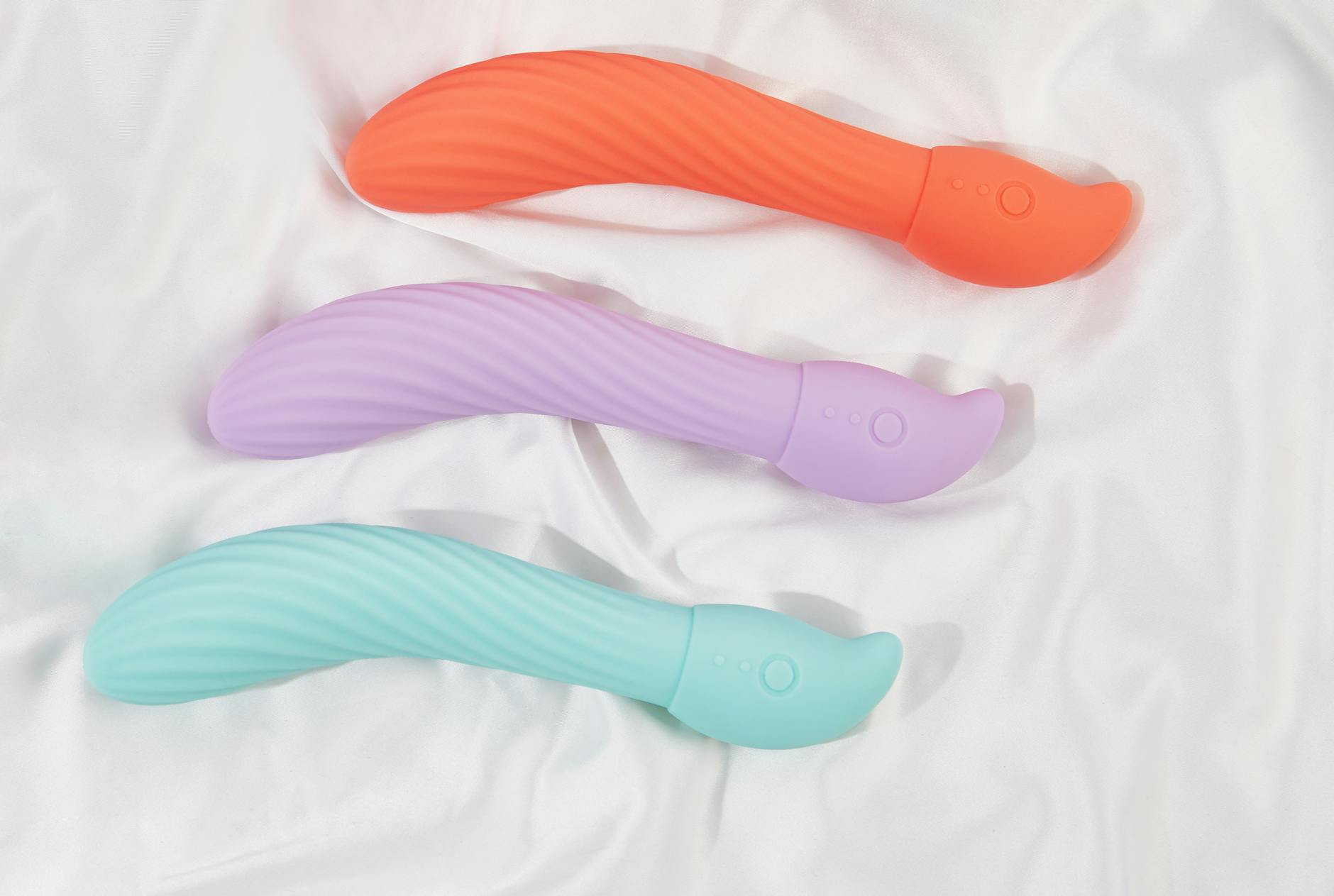
Photo by IFONNX Toys on Pexels
The patterns that actually cause temporary numbness
There are specific habits that lead to the feeling of reduced sensation. If you recognize yourself here, the fix is straightforward.
Using the same pattern every time. If you always go straight to pattern 8 or pattern 10, your clitoral tissue literally stops noticing it the same way. The solution isn't to stop using your vibrator. It's to rotate patterns intentionally. Spend a week primarily using patterns 3, 4, and 5. Come back to pattern 8 after two weeks away, and it'll feel like you've discovered it again.
Never taking breaks. Some people use a lemon vibrator five or six days a week without pause. Again, nothing is broken, but you're asking your nervous system to stay in a constant state of stimulation. One or two days off each week keeps sensation sharp. This isn't about "saving" pleasure for special occasions. It's about biological rhythm. Your skin, your nerve endings, your nervous system all benefit from variation.
Chasing the same orgasm. This is the sneakiest one. If you're always trying to recreate the exact orgasm you had last Tuesday, you're fighting neurological habituation on purpose. Orgasms change based on your cycle, your stress level, your hydration, what you ate, and a hundred other variables. If you chase the same recipe every time, sensation flattens. Let the experience surprise you.
Ignoring pain or discomfort. This one matters. If you're using a lemon vibrator at high intensity regularly and your tissue is slightly irritated, you might interpret that irritation as numbness. It's not. It's inflammation. Using lower patterns, taking breaks, and ensuring proper lubrication fixes this in days, not weeks.
How to keep sensation alive
Four concrete changes that protect your pleasure over the long term.
Rotate your patterns weekly. Spend Monday through Wednesday on patterns 1-3. Thursday through Saturday on 4-6. Sundays off. Switch it up every week. Your nervous system stays engaged because it's never quite sure what's coming.
Use lower patterns more often than you think you should. The Lem has ten patterns. Most people live in patterns 6-10. Spend more time in patterns 3-5. Lower-intensity stimulation is more nuanced, longer-lasting, and keeps sensation sharper than constantly going hard. You're not training yourself for endurance. You're training your nervous system to stay sensitive to subtlety.
Change your approach monthly. One month, focus on speed. One month, focus on angle. One month, use a lemon vibrator with a partner as described in our guide to using a lemon vibrator with your partner. One month, use it solo and focus on the sensation rather than the goal. Variation is the antidote to habituation.
Take a week off every three months. Not because pleasure goes away, but because when you come back to it, you'll remember why you loved it. This is especially useful if you feel like sensation is drifting. One week of not using a vibrator at all resets your baseline completely. Then resume with lower patterns and rebuild from there.
The psychological piece nobody talks about
Here's something important: if you believe that using a vibrator regularly will reduce sensation, you'll interpret normal variation as proof that it has. You'll use it one day and feel amazing, use it the next day and feel less, and assume you're broken when actually you're just tired or stressed or had too much caffeine. Your brain is incredibly suggestible about pleasure.
The anxiety itself can suppress sensation more effectively than any physical habituation ever could. If you're using a lemon vibrator with the underlying worry that you're damaging your ability to feel, that tension lives in your muscles and your nervous system. You're not present. You're vigilant.
The antidote is the same one that works for almost everything in pleasure: permission. You get to use a vibrator regularly without guilt. You get to enjoy this technology. Women, people with vulvas, people in relationships, people who are single, people in their 20s and people in their 60s. Using a clitoral vibrator doesn't make you numb. It makes you someone who understands her own body well enough to use the right tool.
When reduced sensation is actually something else
If you've been using a lemon vibrator consistently for months and your sensation hasn't returned to baseline despite taking breaks and rotating patterns, something else might be at play.
Hormonal shifts hit sensation hard. If you've started or stopped hormonal birth control, entered perimenopause, or experienced significant stress, that's more likely to explain reduced sensation than your vibrator is. Medication can affect it too. So can relationship stress, depression, or just burnout. A vibrator isn't causing the numbness. Life is.
If sensation loss is accompanied by pain, discomfort, or changes to lubrication, see a healthcare provider. That points to something physical that needs attention, not a problem with how you're using a device.
The actual risk of regular use
If we're being completely honest, the real risk of using any vibrator including a lemon clitoral vibrator every single day is not desensitization. It's that you might stop exploring other forms of pleasure. You might become reliant on a single tool to reach orgasm, which can make partnered sex feel less satisfying if a partner can't replicate that exact sensation. But that's a relationship and communication problem, not a biological one. And it's completely solvable by building pleasure confidence with your partner and widening your definition of what pleasure looks like.
Your clitoris isn't going anywhere. Your nerve endings aren't fading. You're not training yourself into numbness. You're using a tool that works. The question isn't whether you should use a lemon vibrator. It's how to use it in a way that keeps exploration alive and sensation fresh. That means variety, breaks, lower intensity, and the radical acceptance that pleasure isn't fragile. It's resilient.
People also ask
Can you become immune to vibrator stimulation?
No. Habituation is temporary and reversible. Your nerve endings don't stop working. What happens is your nervous system adapts to the same stimulus presented the same way repeatedly. The moment you change the pattern, intensity, angle, or take a break, sensation returns to baseline. It's like how you stop noticing background music in a coffee shop until the song changes. The speakers didn't break. Your attention just adapted.
How often is it safe to use a lemon vibrator?
Daily use is completely safe. There's no medical reason to limit it. Some people use a lemon vibrator five or six times a week and never experience reduced sensation. Others use it three times a week and feel the need to rotate patterns. It depends on your baseline sensitivity and your approach. More frequent use actually benefits from more intentional pattern rotation, but it doesn't damage you.
Does using a vibrator make partnered sex less satisfying?
No, but the approach matters. If you only orgasm with a vibrator and never explore partnered touch, partnered sex might feel less intense by comparison. That's not because your body is broken. It's because intensity and sensation aren't the same thing. Solve this by using a vibrator with a partner, varying your solo practice, and getting curious about what partnered touch offers that a vibrator doesn't. They're not competitors. They're different experiences.
Why does my lemon vibrator feel different some days than others?
There are about fifteen variables: your hormonal cycle, hydration, sleep, stress level, how recently you ate, whether you're on your period, your baseline arousal when you start, the time of day, how warm your body is, how much lubrication you're using, and what you were thinking about right before. It's not the vibrator. It's your nervous system being exquisitely responsive to context. This is actually a feature, not a bug. It means you're sensitive.
Can I use a lemon vibrator if I have nerve sensitivity issues?
Possibly, but start low. The Lem has ten patterns. If you have any kind of nerve sensitivity, hypersensitivity, or pain condition affecting your genitals, begin with patterns 1 and 2 and see how your body responds. Air-suction technology is gentler than traditional vibration for some people with sensitivity because it doesn't rely on direct friction. Check our guide to lemon vibrator settings for sensitive clitoral tissue for more specifics.
What's the difference between numbness and just needing a break?
Numbness would be total lack of sensation. That's vanishingly rare. What most people experience is "this isn't giving me the same reaction it used to." That's habituation, which is totally different. Take three to five days off, come back, and if sensation is immediate and strong, you just needed a break. If sensation remains muted after a break and after rotating patterns, check whether something else is at play (hormones, stress, medications, sleep).
The bottom line
Using a lemon vibrator regularly doesn't numb you. It requires intentionality to keep sensation fresh. That means rotating patterns, taking occasional breaks, varying your approach, and staying curious about what pleasure actually feels like rather than chasing a specific memory of it. Your body is remarkable at adaptation. Use that feature, not against it. Variation is the practice that keeps you sensitive, engaged, and discovering new dimensions of your own pleasure for years to come.
If you're feeling stuck or want to explore how to expand your pleasure toolkit beyond a single device, let's talk.