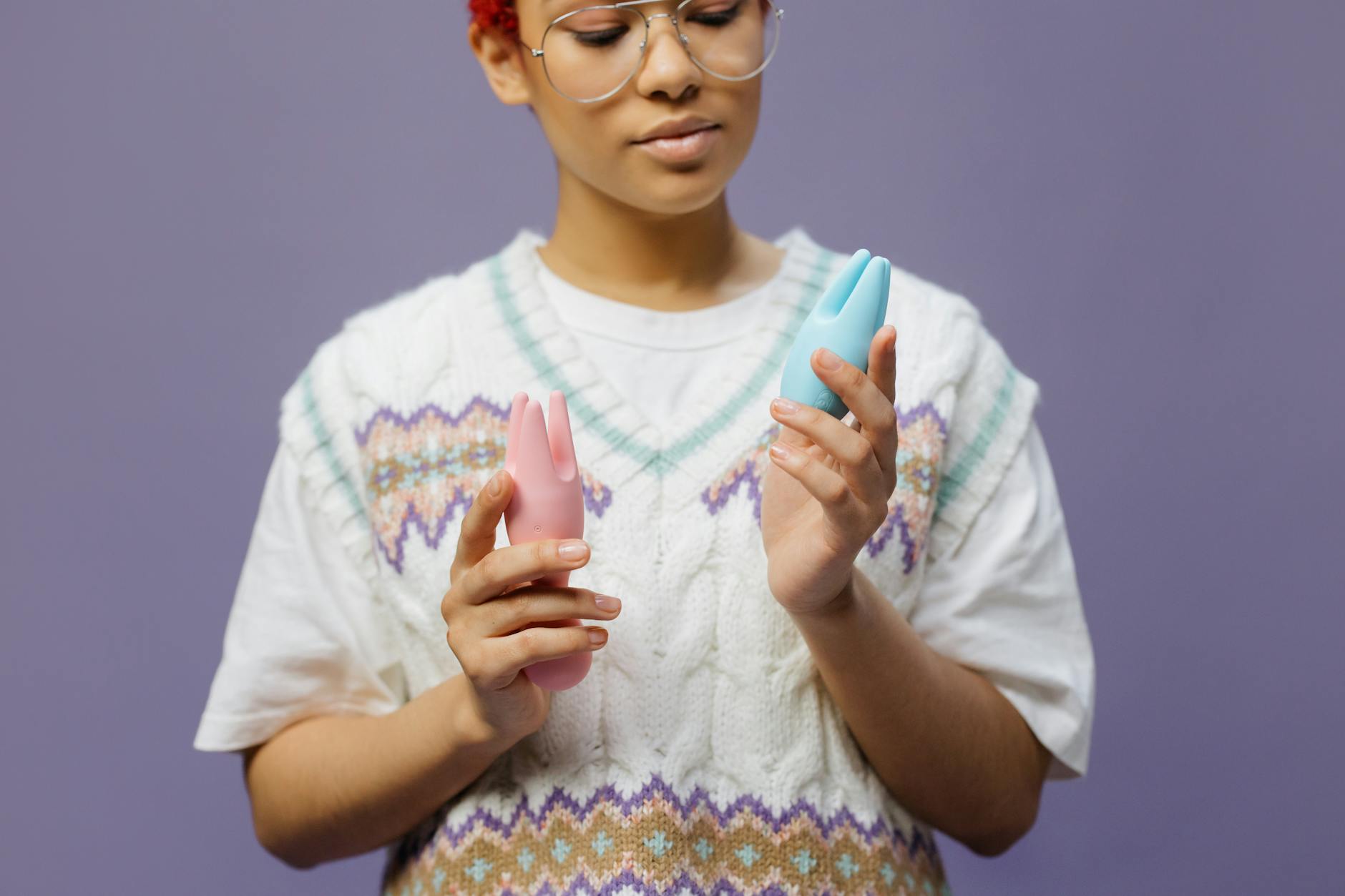
Let's be real about post-breakup numbness
After a breakup, your body doesn't just feel sad. It feels foreign. You might feel disconnected from pleasure entirely, like that part of you checked out the moment they did. That's not weakness. That's a completely normal trauma response, and it's worth understanding before you try to fix it.
When we're emotionally tied to someone, pleasure becomes intertwined with them. Their touch, their rhythm, their presence. After they're gone, your body doesn't immediately know how to feel good alone again. Your nervous system is in protection mode, your mind is elsewhere, and honestly, touching yourself might feel awkward or even painful in ways it never did before.
The good news: reconnecting isn't about forcing yourself to feel good. It's about patience, gentleness, and tools that work with your nervous system instead of against it. A lemon vibrator by Lem Hello Nancy can be part of that process, but only if you approach it the right way.
Why numbness happens after a breakup
Your brain has literally rewired itself around your ex. Dopamine pathways, neural associations, muscle memory. Pleasure wasn't just physical. It was emotional, relational, and deeply neurological. When that person disappears, those networks go quiet. That's not a problem to solve in a week. That's grief, and it has a timeline.
Additionally, breakups activate your nervous system's threat-detection mode. When you're processing loss and abandonment, your body's natural response is to shut down, conserve energy, and protect vulnerable areas. This is why numbness often accompanies heartbreak. Your nervous system isn't broken. It's doing exactly what it's supposed to do.
There's also shame in the mix. If you're struggling to feel pleasure without your ex, that might feel like a failure. It's not. It actually means you had real emotional intimacy. That's something to grieve, not fix.
The first step: rebuilding safety, not sensation
Before you touch yourself with any intention of feeling good, you need to rebuild a sense of physical safety. This sounds abstract, but it matters. A lemon vibrator helps, but it's not magic by itself. The magic is in using it as a tool to remind yourself that your body is yours again.
Start small. Use a vibrator without any pressure to climax. That's it. No goal, no timeline. Just the sensation of the vibration and the knowledge that you're choosing this for yourself. If you're using a Lem vibrator, start on the lowest setting. Some people find that just holding it against their thigh or arm for a minute is enough. You're rebuilding the association between yourself and pleasure, not recreating what you had with your ex.
This phase might take days or weeks. That's normal. You're teaching your nervous system that touch can be safe again.
Slow arousal: the actual path forward
Once you're comfortable with basic sensation, you can start moving toward actual arousal. But here's where most people go wrong: they assume arousal should feel the same as it did before. It won't. Not yet. And that's okay.
With lemon clitoral vibrators, you have precision that helps with this transition. You can start with gentle suction or low-frequency patterns that don't overwhelm your nervous system. They're responsive without being aggressive. That matters when you're rebuilding.
Spend time exploring what feels good now, not what felt good before. Your body might need different pressure, different rhythms, different timing than it needed with a partner. That's not loss. That's data. You're learning yourself again.
Allow 15 to 20 minutes minimum for this exploration. Your body needs time to wake up, especially if you've been numb. Don't rush. If nothing happens after 20 minutes, that's fine. Close your eyes, turn off the vibrator, and try again another day. You're building a practice, not chasing an orgasm.
Managing the emotions that come up
Here's what nobody tells you: reconnecting with pleasure after a breakup can trigger sadness, anger, or even grief. You might start to feel good and suddenly burst into tears. That's not a sign you're doing it wrong. That's your nervous system processing the breakup while simultaneously remembering that pleasure is possible again. Both things are true at once.
If emotions come up, pause. Breathe. Let yourself feel what's there. You don't have to keep going. Your job isn't to push through. Your job is to be gentle with yourself while you relearn your own body.
Some people find it helpful to set an intention before using a vibrator after a breakup. Something simple like "I'm doing this because my pleasure matters" or "My body is mine." That might sound cheesy, but it reframes the experience from trying to replace what you lost to choosing something for yourself. That shift is therapeutic.
The role of fantasy and your ex
You might find that the only way you can get aroused is by thinking about your ex. That's incredibly common after a breakup, and it's not a sign that you should be back together. Your brain is just trying to access the neural pathways it knows work. It doesn't mean you want them back.
That said, if thinking about your ex is actively painful or keeping you stuck, it's worth redirecting. Try fantasy that has nothing to do with them. Read erotica. Listen to audio erotica. Imagine a nameless, faceless scenario. Whatever shifts your focus away from the relationship and toward your own pleasure.
If arousal is still impossible, that's also fine. You're allowed to heal without jumping straight to sexual pleasure. Use the vibrator just for sensation and comfort. No pressure.
Practical setup: how to actually use a lemon vibrator right now
Find privacy. Seriously. You can't rebuild a relationship with your own pleasure if you're anxious about being caught or judged. Lock the door, silence your phone, give yourself 20 minutes.
Start with your vibrator off. Hold it. Feel its weight. Let your body adjust to the idea that you're doing this on purpose. Then turn it on at the lowest setting. If you're using a Lem vibrator, that's pattern 1. Experiment with pressure, angle, and duration. There's no right way. Your body will tell you what feels okay.
If you feel nothing, that's expected. If you feel uncomfortable, stop. If you feel a little bit of something, sit with that. This is practice. You're rebuilding the pathway, not racing to the finish.
Consider how to use lemon vibrators when sensation feels delayed with antidepressants if numbness is medication-related. And if you're struggling with deeper relationship wounds, how to reconnect with your partner using lemon vibrators after growing apart offers perspective on intimacy even after separation.
When solo pleasure isn't enough
If weeks pass and you're still completely numb, or if pleasure feels painful, that's worth mentioning to a therapist. Breakup recovery isn't just about your body. It's about your nervous system, your attachment wounds, and sometimes trauma. A vibrator is a tool, not a cure. You might need both.
A therapist trained in somatic work or attachment-based therapy can help you understand why numbness is persisting and give you strategies beyond this guide. That's not a failure. That's you getting the support you actually need.
Rebuilding takes time, not intensity
You're not supposed to feel amazing again in two weeks. You're supposed to slowly, gently, with no judgment, rebuild the connection between your body and pleasure. Some days that means a five-minute session with a Lem vibrator at the lowest setting. Some days it means not touching yourself at all and just sitting with your own company.
Both are progress. Your job is consistency and self-compassion, not outcomes. Keep showing up. Your body remembers how to feel good. It just needs time and permission to do it on your own terms.
FAQ: Reconnecting After Breakup Numbness
How long does it take to feel pleasure again after a breakup?
There's no universal timeline, but research on grief suggests that the acute phase lasts 6 to 12 weeks. That said, pleasure often returns before your emotional pain fully resolves. Some people notice physical sensation returning within 2 to 3 weeks of intentional practice. Others take months. Antidepressants, trauma history, and the length of the relationship all factor in. Be patient with yourself.
Is it normal to think about my ex while using a vibrator after we break up?
Completely normal. Your brain created neural pathways that associated arousal with them. Breaking that link takes time and redirection. Try shifting to new fantasy material, erotica, or just sensation without narrative. Your brain will eventually build new associations. There's no shame in this process.
Should I wait until I'm completely over my ex to use a vibrator again?
No. Using a vibrator intentionally during breakup recovery can actually help your nervous system recognize that pleasure exists outside the relationship. You don't have to be "over it" to begin reconnecting with your body. You just have to approach it gently.
What if using a vibrator triggers sadness or crying?
That's a sign your body is processing emotion while remembering capacity for pleasure. Pause, breathe, let the feelings move. You can resume later or another day. Emotions during pleasure reconnection are information, not failure. Honor them.
Can a lemon vibrator help with breakup recovery if I have trauma history?
Maybe, but carefully. If you have trauma related to touch, control, or intimacy, start even slower. A Lem vibrator's gentle suction can feel safer than traditional vibration for some people. Work with a trauma-informed therapist alongside your solo exploration. Your safety comes first.
How do I know if numbness is breakup-related or something else?
Breakup numbness typically shows up suddenly after the relationship ends and improves gradually over weeks. If numbness has persisted for months, never existed before the relationship, or feels linked to depression or medication, check in with a doctor or therapist. Sometimes pleasure loss points to physical health changes, not just emotional ones.
You're rebuilding, not starting over
Your body knows how to feel pleasure. A breakup didn't erase that. It just temporarily wired your nervous system into protection mode. Using tools like a lemon vibrator, approaching yourself with gentleness instead of pressure, and giving yourself actual time are how you remind your body what's possible.
You deserve to feel good alone. Not someday. Now. Not in a dramatic, everything-is-fixed way. In a slow, honest, self-directed way that's entirely yours.