
Here's the most common argument couples never name
One partner is ready. The other isn't. Not almost ready. Not getting there. Just... not at the same pace. So one person waits, feeling guilty for being slow. The other person waits, feeling rejected for being eager. Neither person is wrong. The timing is just wrong.
This happens more often than you'd think, and it has almost nothing to do with attraction.
What arousal speed actually is
Arousal isn't a switch. It's a dial, and every person's dial has a different baseline speed. Some people hit high arousal in under ten minutes. Others need twenty, thirty, or forty minutes of consistent stimulation and mental engagement to reach the same place. Neither is better. Both are completely normal.
Here's the science part: arousal depends on blood flow, neurological response, hormonal state, stress levels, and how much mental bandwidth you have available. If your partner just finished a work call or is worried about the kids, their arousal dial moves slower. If you're fresh and have been thinking about sex all day, yours moves faster. Add in differences in baseline sensitivity, medication effects, and just plain biology, and you've got a mismatch that no amount of attraction can fix.
The mistake most couples make is treating this as a personal problem instead of a timing problem.
Why mismatched arousal kills intimacy
When arousal speeds don't match, one partner typically does one of three things.
They push harder, which makes the slower partner feel pressured and shuts them down further. They wait passively, which makes the eager partner feel rejected and resentful. Or they give up, which turns into a dead bedroom or a partner who's secretly frustrated. None of these are sustainable.
The second problem is that mismatched arousal creates a shame loop. The slower partner starts to feel broken. "Why can't I just get there faster?" The eager partner starts to feel selfish. "Why am I always the one who wants it?" Both feelings are understandable and both are wrong. Your partner isn't broken. You're just on different timelines.
How lemon vibrators change the math
Clitoral vibrators like the Lem work because they compress the arousal timeline without forcing it. Suction-based stimulation reaches nerve endings that take longer to engage with friction alone. For the slower-to-arouse partner, this can mean cutting ten minutes off the warm-up time. For the eager partner, this means you're not just waiting around frustrated. You're both actively engaged in the same activity.
Here's what this actually looks like in practice: instead of one partner trying to manually stimulate the other while the eager partner waits, you're both present in foreplay with a lemon clitoral vibrator in the mix. The slower partner gets consistent, focused stimulation that doesn't fatigue either of you. The eager partner feels useful and connected instead of stuck in neutral.
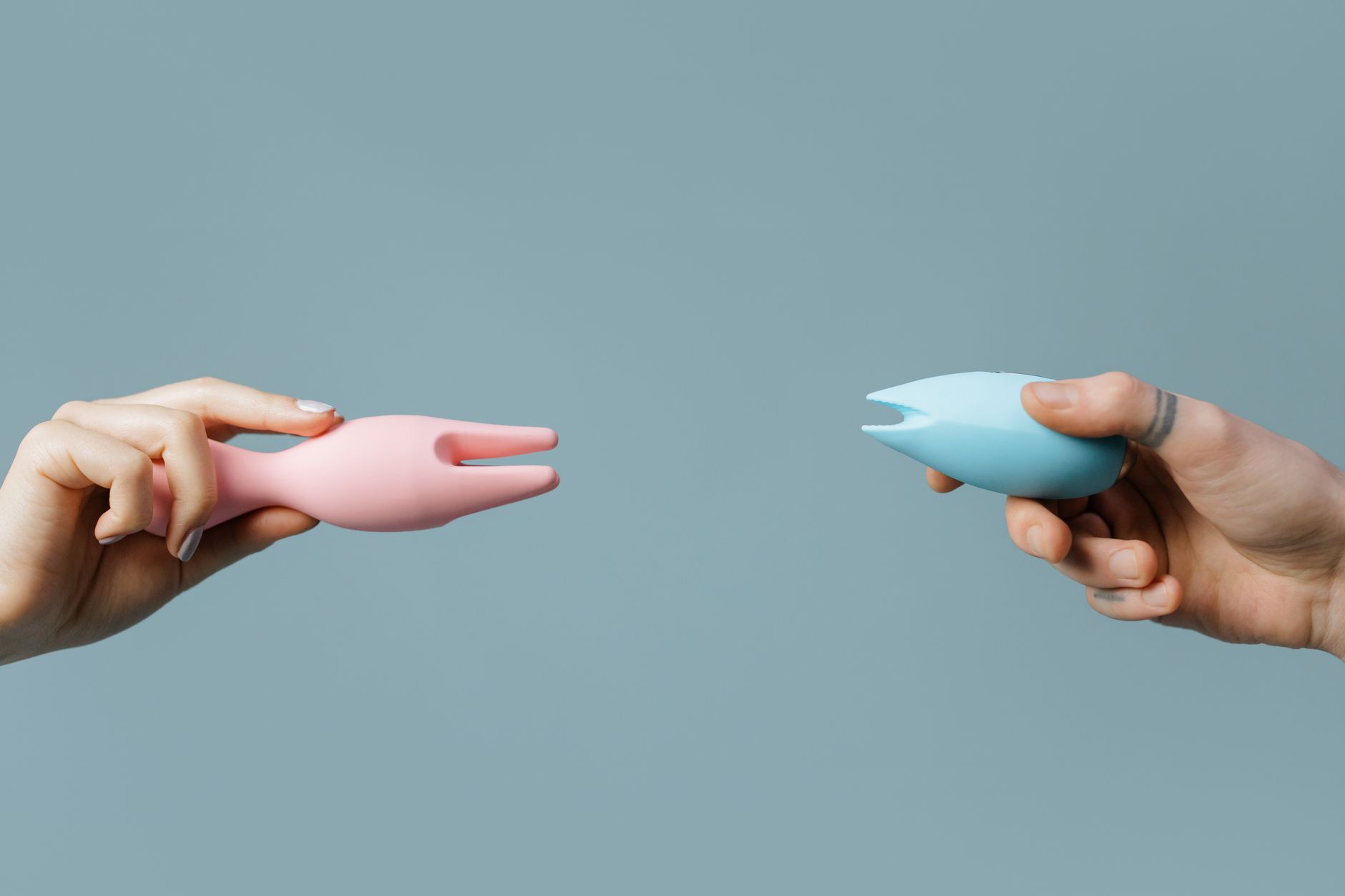
Photo by cottonbro studio on Pexels
The protocol that actually works
Let's say one of you gets there in fifteen minutes and the other needs thirty-five. Here's a realistic framework.
The fifteen-minute hold. The faster partner sets a timer. For the first fifteen minutes, foreplay is about the slower partner. No penetration. No direct stimulation of the faster partner's most sensitive areas. The faster partner is engaged but not escalating. This feels counterintuitive, I know. But it works because the faster partner isn't sitting in frustrated limbo, and the slower partner isn't performing under pressure.
Minutes fifteen to twenty-five. The Lem or another lemon vibrator comes in. Start at lower patterns and build. This is when the slower partner's arousal accelerates. You're not starting from zero with five minutes to go. You're building from a solid foundation of foreplay. The faster partner can kiss, touch, or be touched. The goal is mutual engagement, not penetration yet.
The final stretch. Once the slower partner is clearly in the higher arousal zone, you can introduce whatever you both want. Penetration, different positions, whatever. By now you're much closer in arousal levels, so the experience feels more balanced. Neither person is faking or performing. Both people are genuinely engaged.
The time investment is longer than if you were only matching the faster partner's timeline. But the sex is better, because both people are actually there.
The conversation that has to happen first
None of this works without talking about it beforehand. Not during sex. Before. When you're both clothed and hydrated and can actually think clearly.
Start with this: "I've noticed that we sometimes get out of sync in terms of what we're ready for. That's totally normal, and I don't want either of us to feel rushed or left behind. Can we talk about how we might handle that?"
Then ask these questions.
How long does warm-up typically take for each of you? Be specific. Not "a while." Minutes. Roughly.
What kinds of stimulation help you get there faster? Manual? Oral? A toy? Direct or indirect pressure?
When you're aroused slower than your partner, what makes you feel most supported? Patience? Reassurance? A specific kind of touch?
When you're aroused faster, what would make the waiting feel less like waiting? Being touched? Touching your partner? Having a specific role in their warm-up?
These answers give you actual data instead of assumptions. You might find that the "fast" partner actually prefers indirect stimulation during warm-up, which slows them down naturally. Or the "slow" partner responds really quickly to a specific touch pattern, which speeds them up. You won't know until you ask.
The lemon vibrator becomes a tool, not a crutch
This is important: the Lem or another clitoral vibrator isn't a Band-Aid on a broken sex life. It's a tool that makes communication easier. Instead of saying "you take too long," you're both saying "let's use this to make foreplay feel better for both of us." Instead of one person white-knuckling through discomfort, you're both problem-solving together.
Over time, many couples find that the consistent warm-up time actually helps the slower partner's body learn to respond faster. Not magically. But neurologically, arousal is responsive to patterns. If your body knows it gets consistent, pressure-free stimulation every time, it starts to prepare for that. The timeline might not eliminate the difference, but it often narrows it.
When mismatched arousal signals something else
Sometimes the mismatch isn't biological. Sometimes it's relational. If one partner is consistently uninterested in foreplay or unresponsive to their partner's touch, that's worth examining separately. Low desire, resentment, feeling disconnected, or just needing more emotional closeness often hide under the label "slow arousal."
If you talk through this framework and one partner is still checked out, that's a signal to have a bigger conversation about the relationship itself. That's not a vibrator problem. That's a connection problem, and it deserves space to breathe.
The rhythm that makes sense
Honestly, mismatched arousal is one of the easiest problems to solve because it has a clear solution: time, communication, and the right tools. Lemon vibrators work because they speed up the slower partner without making anyone feel rushed. They give the eager partner something to do with that energy besides pressure. And they give you both permission to take sex seriously as something worth adjusting for.
Your pleasure timelines don't have to match perfectly. But they do need to be honored. If you're curious about how a lemon sucker vibrator might fit into your foreplay, start with how to use lemon vibrators with longer foreplay for maximum pleasure, which covers timing in more detail. And if you're navigating desire differences more broadly, how lemon vibrators help with arousal when you have low desire or responsive desire might clarify whether this is a speed issue or something deeper.
People also ask
How long should foreplay actually take when arousal speeds are different?
Foreplay should take as long as it takes for the slower-aroused partner to reach a genuine state of arousal. That might be twenty minutes. It might be forty. The timeline isn't about performance or proving something. It's about both people actually being ready. Build in the time before you start, don't discover halfway through that you're out of sync.
Can a lemon vibrator really help bridge the arousal gap?
Yes, but not magically. Clitoral vibrators like the Lem work because they provide consistent, focused stimulation that often speeds up arousal without fatigue. They also give the eager partner an active role in foreplay instead of a passive waiting role. That shift in energy alone changes the dynamic. Use it as part of a foreplay plan, not as a substitute for communication.
What if my partner refuses to slow down to my timeline?
That's a different conversation than mismatched arousal. If your partner consistently prioritizes their own pleasure over your comfort and experience, that's a respect issue, not a timing issue. A good partner adjusts. They ask questions. They want both people to actually feel good. If that's not happening, consider talking to a relationship counselor.
Is it normal for arousal to take longer as you get older?
Completely normal. Blood flow changes, hormone levels shift, and stress often increases. If you're noticing a change in your arousal timeline, that's usually biological, not relational. A lemon vibrator often helps because it provides direct neural stimulation without relying on the slower physiological responses that shift with age.
Should I bring a vibrator into couple's sex if we've never used one before?
Yes, but with a conversation first. Frame it as "I want us both to feel amazing" instead of "you're not doing it right." Start by using it during foreplay, not as the main event. Let your partner hold it, control the settings, or guide where it goes. This makes it collaborative instead of introducing a third presence. You might find it completely changes how you connect.
What if we try a lemon vibrator and it still doesn't help with arousal mismatch?
Then the issue might not be arousal speed. It could be desire difference, resentment, low libido from stress or health issues, or just needing more emotional connection before physical connection. If a tool doesn't solve a problem, the problem usually needs a different kind of attention. A conversation with a relationship therapist can help you figure out what's actually going on underneath the timing issue.
The bottom line
Mismatched arousal timelines are one of the most solvable relationship problems. You just need three things: honest information about how your bodies actually work, a communication framework that doesn't shame either partner, and tools that make foreplay work better for both of you. Lemon vibrators fit perfectly into that puzzle. They're not the relationship fix. But they're incredibly useful once you've done the relational work.
If you're ready to explore how a device like the Lem might work for you as a couple, get in touch at Hello Nancy. And if you'd like to learn more about timing and communication with a partner, how Lemon Vibrators rebuild intimacy after relationship conflict or distance offers more conversation starters.