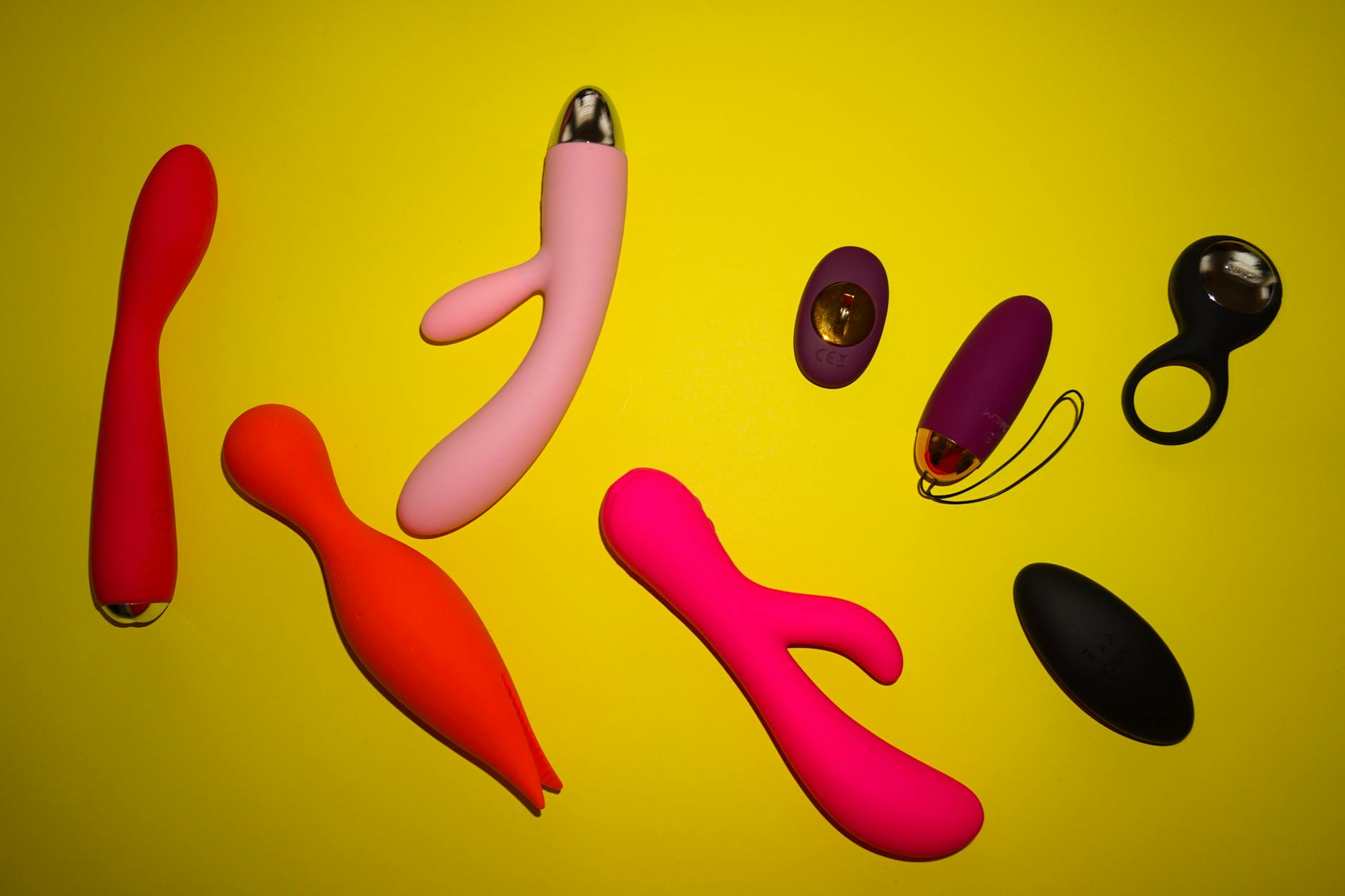
Here's the thing nobody warns you about: sex changes in your forties
It's not that it stops. It's that it becomes a conversation your body wasn't having before. Arousal takes 15 minutes instead of five. Sensation feels softer, or sharper, or weirdly absent until the right moment. Desire shows up differently. You might want it less often, or you might want it more but in a way that feels unfamiliar.
Most people interpret this as a problem. It's not. It's information. Your body is telling you that the same approach that worked at 25 needs to evolve.
What actually happens to arousal and desire in midlife
Your hormones shift gradually. Estrogen doesn't cliff-dive like it does in menopause, but it's not constant anymore. Testosterone, which drives desire in everyone regardless of body type, tends to decline. The pelvic floor loses elasticity. Vaginal tissue becomes thinner and less lubricated. The neural pathways for arousal don't disappear, but they require longer warm-up time and often more direct, focused stimulation.
Here's the part therapists don't always tell you: your brain is also different. By your forties, you've likely accumulated decades of sexual scripts, expectations, and sometimes trauma. You might be managing career stress, relationship fatigue, or caretaking responsibilities that genuinely hijack your nervous system. Desire doesn't exist in isolation. It lives inside your whole life.
Physically and psychologically, you're dealing with legitimate changes. And the tools that worked before don't always work anymore.
Why clitoral vibrators become essential in midlife
A lemon clitoral vibrator, or any focused suction-based clitoral toy, works because it meets your body where it actually is in your forties. Here's why:
First, the sensation is different from fingers or a partner's touch. Suction creates a unique neural pattern that bypasses the need for constant friction. For tissue that's become more sensitive or less responsive, this matters. You're not fighting your body's actual thresholds. You're working within them.
Second, intensity is adjustable and consistent. Your partner's hand gets tired. Your own hands get cramped. A lemon vibrator delivers the exact same sensation for as long as you need. No performance pressure. No timing anxiety.
Third, and this is huge, it gives you permission to focus on yourself. By the time you hit your forties, sex often becomes a negotiation between your needs and someone else's. A vibrator lets you separate those conversations. It says: this time is mine. This sensation is for me. That mental shift alone transforms the experience.
The midlife adjustment cycle: what to expect
When you first start using a lemon clitoral vibrator after years without one, your body might surprise you. Sensation might feel too intense. Or weirdly distant. Or you might find that pleasure arrives differently than it used to. All of this is normal.
Start with the lowest setting. Let your body acclimate to a new sensation pattern. Warm up longer than you think you need to. Move the vibrator around different parts of your vulva, not just the clitoris itself. Your most sensitive zones might have shifted.
Many people in their forties report that arousal builds in layers. Instead of a quick ramp from zero to orgasm, it's more like: gentle sensation, then mild interest, then actual engagement, then genuine arousal, then openness to orgasm. This isn't worse. It's actually more textured. If you try to force the old five-minute arc, you'll feel stuck. If you honor the slower build, you often end up somewhere deeper.
Using a lemon vibrator solo versus with a partner
There are two different conversations here, and they're not the same.
Using a lemon vibrator alone in your forties is about reclaiming your own pleasure as a valid thing. Not a backup plan. Not a replacement for partnered sex. Just yours. This resets your nervous system and reminds you what you actually like. Many people find that solo pleasure becomes more satisfying in their forties than it was earlier because there's zero performance pressure and maximum permission.
Using a lemon vibrator with a partner is a different negotiation. Some couples find that introducing a vibrator rekindles intimacy because it removes the pressure on the partner to be the only source of stimulation. Others worry it means something went wrong. It doesn't. It means you're both evolving.
If you're considering this with a partner, separate the logistics from the emotion. Have a conversation when you're not in bed. Say something like: "My body has changed, and I'd like to try something that helps me feel more pleasure. I want to explore this with you." Then actually listen to what they say. Sometimes partners are relieved. Sometimes they need time. Both are valid.
When midlife intimacy involves medication or health shifts
Many medications that become more common in your forties affect arousal and sensation. Antidepressants, blood pressure meds, hormonal birth control you might still be using. If you're on any of these, a lemon clitoral vibrator offers more consistent stimulation that can actually work around medication side effects. It's not a cure, but it's often genuinely helpful.
If you've had surgery, pelvic floor issues, or ongoing health stuff, vibration-based stimulation sometimes works better than friction-based touch. The sensation is different enough that it bypasses pain patterns or numbness.
The broader point: your forties often come with more medical complexity than earlier decades. A vibrator that's easy to control, with adjustable intensity, gives you agency when your body feels like it's not cooperating.
The psychological piece matters more than the physical one
You're not broken if intimacy slowed down. You're not failing if you need different tools. You're not less desirable. But I'll be real with you: decades of messaging tells you that if sex has changed, something went wrong. With you. With your partner. With the relationship.
That's wrong. Sex changing is not a failure. It's an evolution. And couples who adapt together often end up with better sex than they had earlier, because it's based on actual knowledge of what works instead of assumptions.
If you're struggling with shame around using a vibrator, or around needing more time or different stimulation, that's worth examining. Your pleasure matters. Your body's real needs matter. A lemon vibrator is just a tool that honors that.
How to actually introduce this into your routine
If you're solo: Try it when you have time. Not rushed. Let yourself be curious about sensation instead of goal-oriented about reaching orgasm. Notice what feels good, what feels weird, what you actually want.
If you have a partner: Maybe use it alone first, so you're not discovering it together under pressure. When you're ready, show them in a casual way. "I got this. Want to watch? Want to help?" Invite participation but don't make it mandatory.
Start with a few sessions before you form opinions. Your body needs time to adjust to a new sensation. It's not like a switch. It's more like learning to love a new coffee shop. First visit, it feels unfamiliar. By the fifth, it's your spot.
Regarding lemon sexual toys specifically, the design of something like the Lem vibrator accounts for the way pleasure actually works in midlife bodies. The pattern, the intensity range, the shape. It's not an accident that so many people in their forties find it genuinely helpful.
FAQ: Your actual questions about midlife intimacy and vibrators
Is it normal for arousal to slow down in your forties?
Completely. Your nervous system is different. Hormones are shifting. You likely have more stress and more complex emotional history. All of that affects arousal speed. This isn't a defect. It's just how bodies work at this life stage.
Will using a vibrator make partnered sex less satisfying?
Actually, often the opposite. When you know what works for your body, you can communicate it better. Plus, couples who use vibrators together report higher satisfaction overall, according to most sexual health research. The vibrator is a bridge, not a replacement.
How do I talk to my partner about this without it seeming like criticism?
Don't frame it as a problem with them or the relationship. Frame it as curiosity about your own pleasure. "My body has changed and I'm interested in exploring what feels good now. I'd like to try this. Interested in being part of it?" That's an invitation, not an accusation.
What if I don't have a partner?
Then this is purely about you and your own pleasure. Which, honestly, is where the best exploration happens. No negotiation. No performance pressure. Just you and what actually feels good.
Does using a lemon vibrator mean something's wrong with my sexuality?
No. It means you're paying attention to your body. That's the opposite of something being wrong. That's wisdom.
How often should I use a vibrator if I'm new to this in my forties?
As often as feels good. There's no schedule. If you're solo, weekly is common. If you have a partner, maybe less frequently, or interwoven with partnered intimacy. Listen to what actually turns you on instead of forcing a rhythm.
The real thing about intimacy in your forties
Sex doesn't end in your forties. It transforms. Your desires might narrow or shift. Your body's responsiveness changes. Your relationship to pleasure evolves.
The couples and individuals I work with who navigate this transition well have one thing in common: they stop treating it as decline and start treating it as data. Your body's slowing down isn't a problem. It's information about what you actually need.
A lemon clitoral vibrator, or any focused tool, is just permission to listen. If you're curious, try it. If it doesn't work for you, that's fine too. But give it real time before you decide. Your forties aren't the end of sexual pleasure. For many people, they're the beginning of knowing what actual pleasure really feels like.
If you want personalized guidance on navigating intimacy changes in midlife, whether solo or partnered, I'm here. Reach out and let's talk about what would actually help.