
Here's what nobody says out loud
You can have mind-blowing orgasms alone and feel almost nothing with your partner. Both things are true at the same time. And that gap between solo pleasure and partnered sex is one of the loneliest feelings in a relationship.
It happens more than you'd think. The disconnect isn't about your partner or your body. It's usually about attention, pressure, or the stories we're telling ourselves about what we're supposed to feel.
Why the pleasure gap widens
When you're alone with a lemon vibrator or any pleasure toy, you have complete control. No one's watching. No one's timing. No one's expectations hovering over the moment. Your brain can focus entirely on sensation instead of performing.
With a partner, even when they're being generous and present, there's an invisible script running. Am I taking too long? Are they getting bored? Should I be enjoying this more? That cognitive load kills arousal faster than anything else.
Add in relationship friction (even small stuff) and your nervous system doesn't fully relax. Your body knows. Arousal requires safety, and safety requires trust that's not just intellectual. It's felt.
Then there's the physical mismatch. Partners rarely touch the way your hands do. They approach from different angles, use different pressure, miss the exact spot that makes your nervous system light up. With a lemon clitoral vibrator, you know exactly where the sensation goes. With a partner's hands or even another toy, you're constantly adjusting, redirecting, managing.
What the disconnect actually tells you
Here's the thing I tell every couple who comes to me with this exact problem: the disconnection isn't a relationship failure. It's information.
It's telling you that you need more permission. More presence from your partner. More honesty about what actually feels good versus what you think should feel good. And often, it's telling you that your partner doesn't fully understand how your body works.
Most people have never been taught how to touch someone else in a way that builds genuine arousal. They've watched movies. They've guessed. They've listened to partners who were guessing too.
A lemon vibrator is actually a perfect teaching tool here. Not because it replaces your partner's touch, but because it shows them what works.
The bridge-building conversation
Before you introduce toys into partnered sex, you need one conversation. Not during sex. Not when you're already frustrated. A separate, grounded conversation.
Start with something like: "I notice I feel more present and aroused when I'm alone, and I want to change that. I think it's partly that I'm not relaxed enough with someone else, and partly that I don't know how to guide you to the exact sensations that work for me. I don't think that's a problem with you or us. I think it's fixable."
Then tell the truth about what you want. "I'd like to explore using a lemon vibrator together. Not instead of you. With you. I think it could help me show you what I actually respond to, and it might actually feel really good."
If your partner is hesitant, that's worth exploring separately. Sometimes hesitation is about insecurity. Sometimes it's about feeling replaced. Sometimes it's about not understanding the purpose. Talk that through. Let them ask questions. Let them feel what they feel.
But if they're genuinely resistant to your pleasure, that's a different conversation entirely.
How to actually use a lemon vibrator together
Start solo, in front of your partner, if you feel safe doing that. Show them what you do. Don't perform. Actually use it. Actually let yourself feel good. This demystifies the whole thing and lets your partner see that it's not about them being inadequate. It's about your body having specific preferences.
Then invite them to take over. Some people feel more comfortable having a partner hold and control the vibrator than doing it themselves. The benefit: your partner gets tactile feedback about what you're responding to. They feel where your body tenses, hears how your breathing changes, can adjust in real time.
This is radically intimate when it works. Your partner is literally learning your pleasure map.
Start with external stimulation. A lemon clitoral vibrator works beautifully for this because the suction sensation is distinctly different from fingers or a traditional vibrator. Your partner can start at the lowest setting and let you guide the intensity.
Here's the key detail that changes everything: your partner should be touching you elsewhere too. Your neck, your chest, your inner thighs. The vibrator is one part of the experience, not the whole thing. That continuity of touch from multiple sources helps your nervous system believe this is intimate, not clinical.
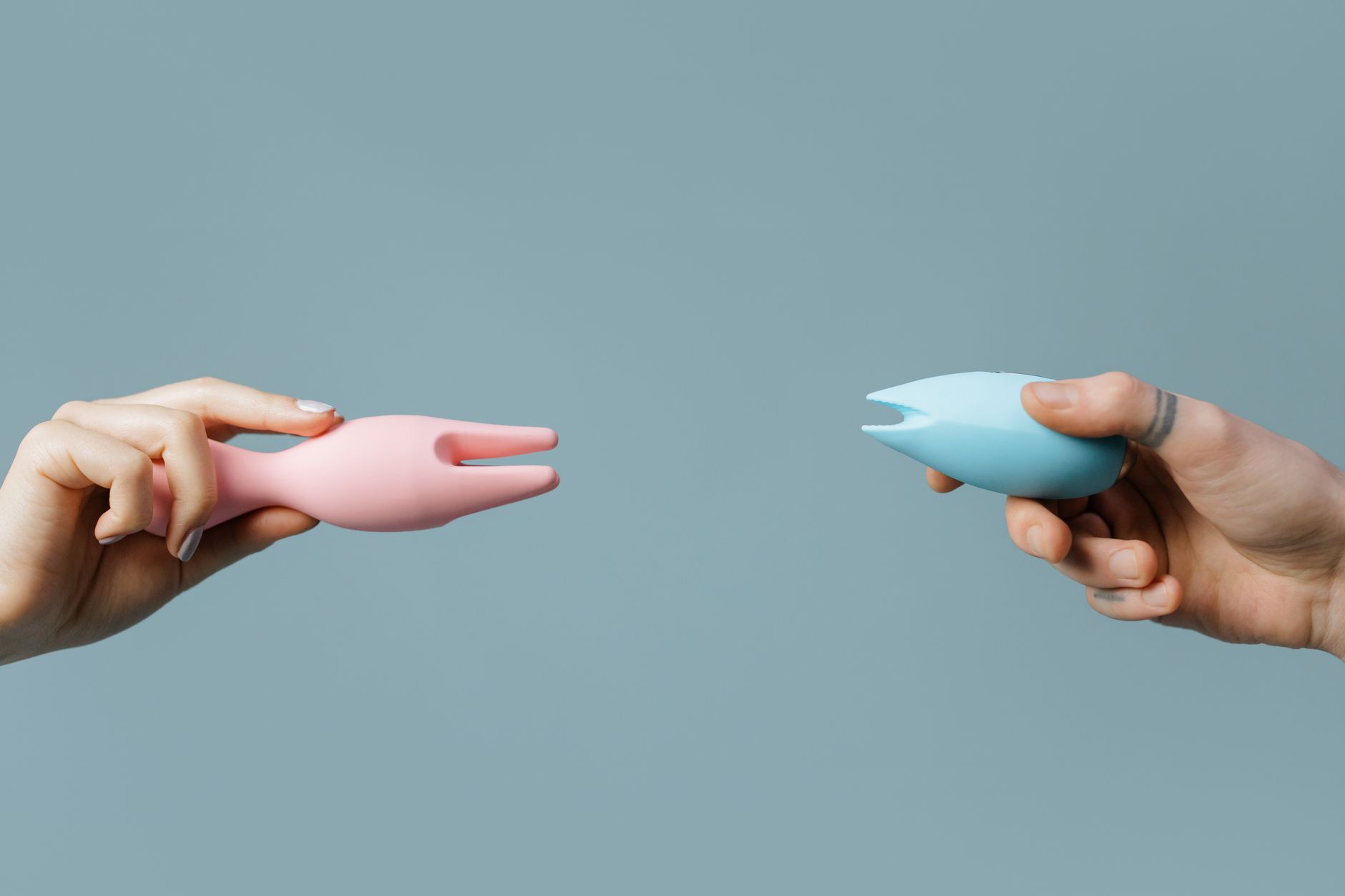
Photo by cottonbro studio on Pexels
Addressing the real obstacles
Sometimes the disconnect isn't about technique. It's about resentment. It's about mismatched desire or unresolved hurt. A lemon vibrator can't fix that. Only you two can.
If there's contempt in your relationship, or you feel unsafe, or you're deeply angry at your partner, introducing a pleasure toy won't bridge the gap. It might even widen it. That's when you need a real conversation, possibly with a couples therapist, before sex becomes a focal point.
If the disconnect is more recent, tied to a specific event (infidelity, a breach of trust, a major life stressor), that's also something to address first. Your body's withdrawal is protective. That's actually correct.
But if it's just erosion, the slow fade that happens in long-term relationships when you stop really looking at each other, then yes. A lemon vibrator and the conversation that comes with it can help you rebuild.
What changes when you do this together
When your partner learns what actually turns you on, the entire dynamic shifts. They feel less like they're failing. You feel less like you're broken. The sex becomes collaborative instead of parallel.
Many couples also find that introducing a toy reduces performance pressure. You're not relying entirely on your partner's body or your partner's skill. The vibrator is doing some of the work. That permission to lean on a tool often paradoxically makes partnered sex feel more intimate, not less.
Your partner also gets something out of it: clarity. Purpose. The satisfaction of actually knowing how to bring you pleasure instead of guessing.
And you get what you came for. The ability to feel genuinely aroused with someone you care about. The pleasure gap closes.
FAQ: Pleasure, partners, and lemon vibrators
Will using a vibrator with my partner make them feel inadequate?
Maybe, if you introduce it wrong. But if you frame it as "I want us to figure this out together," it becomes collaborative, not comparative. Your partner isn't being replaced. They're being given better information. Most partners actually feel relief when they finally understand what works instead of endlessly guessing.
What if my partner refuses to try this?
That's a separate issue worth exploring. Refusal often comes from insecurity, fear of being replaced, or misunderstanding what a toy actually does. Sometimes it comes from deeper relationship problems. Have the conversation about why they're resistant, not just the fact that they are. If the resistance is absolute and you're genuinely unhappy, that's worth couples counseling.
How do I use a lemon vibrator if I have a partner who's worried about it feeling clinical or unromantic?
Start with lower-pressure contexts. Use it during foreplay before partnered sex. Keep it playful. Let your partner watch you enjoy it. Frame it as an extension of what you do together, not a replacement. Most people find that pleasure is actually more romantic than awkwardness and guessing.
Can using a vibrator together actually help reconnect us intimately?
Absolutely, if the deeper disconnection is about not understanding each other's bodies or about performance pressure. A lemon clitoral vibrator gives you a shared project: figuring out what works, communicating about pleasure, collaborating instead of parallel-performing. That's deeply intimate.
What if I feel guilty for needing a toy to feel aroused with my partner?
Let that go. Needing a specific type of stimulation isn't a character flaw. It's how your nervous system is wired. A lemon vibrator isn't a crutch. It's information. It tells your partner exactly what your body needs. That's actually generous information, not shameful.
Is it normal to feel more aroused alone than with a partner?
Very normal. Solo, you have total control, zero performance pressure, and complete safety from judgment. With a partner, even a loving one, there's cognitive load. That doesn't mean your relationship is broken. It means you need better communication and possibly some tools to rebuild trust and presence.
The real work starts in conversation
A lemon vibrator is a magnificent tool, but it's not magic. It won't fix a relationship that's fundamentally broken or rebuild intimacy where there's real damage.
What it can do is create a bridge. A way to have a conversation that might otherwise feel too vulnerable. A physical focal point for talking about pleasure, desire, and what you actually need.
If you're feeling disconnected, start there. Have the hard conversation. Then, if your partner's willing, use a tool together that lets you both learn. The pleasure gap closes when you stop making it mean something's wrong with either of you, and start treating it as information worth exploring together.
If you're stuck on how to begin that conversation or what it might look like, reach out. We can talk through it.