Let's be real about emotional numbness
When a relationship cools, the body goes quiet first. You might still want sex. You might initiate. But somewhere between intention and sensation, the signal gets lost. Touch that used to spark something now feels like pressure. Arousal, if it comes at all, feels performative. You're going through the motions while your nervous system is somewhere else entirely. This is not a desire problem. This is disconnection.
Emotional distance and physical numbness are deeply connected. Your brain doesn't separate intimacy from sensation the way anatomy textbooks do. When you feel unseen by a partner, your body learns to protect itself by dampening pleasure signals. It's actually your nervous system being smart. But smart doesn't feel good, and it definitely doesn't feel like you anymore.
Here's what I see in my practice: the numbness often persists even after the relationship improves because the body doesn't automatically trust that the distance is gone. You need to rebuild the pathway from sensation to pleasure independently. A lemon clitoral vibrator is one of the most effective tools for doing that.
Why partner disconnection kills sensation
When emotional safety drops, your parasympathetic nervous system (the one that allows arousal) gets outcompeted by your sympathetic system (the one that keeps you safe). You're technically available for sex, but your body is in low-level alert mode. Sensation doesn't register as pleasure. It registers as touch, period.
Over weeks or months of this, something shifts. The neural pathways that connect touch to arousal start to thin out from disuse. Your clitoris doesn't lose sensitivity exactly, but the brain's response to that sensitivity does. This is why many people describe their sensation as "numb" even though a clinical test would show the tissue still responds to stimulation. The numbness is in the interpretation, not the receptor.
Another layer: when a partner is involved in your numbness, using pleasure with that partner often feels like asking the wound to heal while it's still being prodded. Your nervous system knows better. Solo exploration is not selfish here. It's the pathway back.
How lemon vibrators work differently for this specific situation
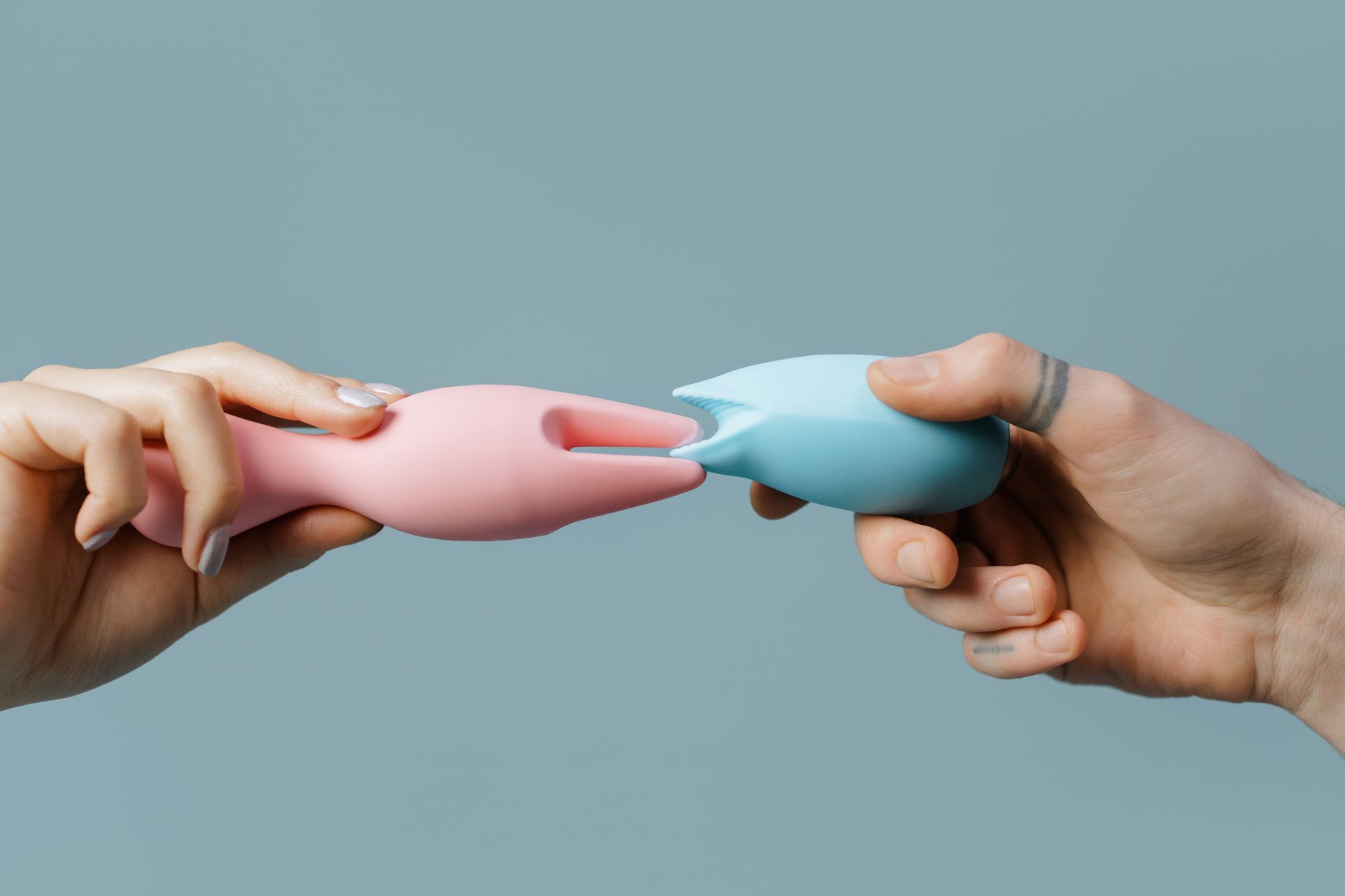
Lemon vibrators, especially the air-suction technology that Lem Hello Nancy designs, offer something traditional vibration doesn't: sustained stimulation that builds sensation gradually. You're not looking for an orgasm response right now. You're looking to remind your nervous system that touch can mean pleasure.
The suction pattern of a lemon clitoral vibrator creates a gentle pull that engages nerve endings in a way that feels almost completely different from the penetrative or grinding pressure of other toys. This matters when you're rebuilding. Your body isn't cycling through old neural grooves. You're creating new ones.
Start at the lowest intensity. Not because you're broken, but because your nervous system needs permission to notice the sensation without jumping straight to goal-oriented pleasure. The goal right now is presence, not release.
Building the practice: how to actually do this
Set aside fifteen to twenty minutes. Alone. In a space where you genuinely won't be interrupted. Your partner doesn't need to be in another room pretending not to listen. They need to be actually gone.
Start without the lemon vibrator. Touch your own arm, collarbone, neck. Slow. Nowhere near genital. Notice what you feel. Not what you think you should feel. Not what you used to feel. What you actually feel right now. Many people find that reconnecting to sensation happens first in non-erotic areas.
Then move to your inner thighs, labia, the outer areas. Still no vibrator. Let your hands rebuild the map. Your brain is learning: this touch is not part of a performance. There's no partner. There's no goal. There's just data.
When you're ready, turn on the lemon vibrator at the lowest setting. Place it on the outer areas first. Let the sensation build for a minute before moving anywhere else. Notice: does this feel different from your partner's touch? Good. That's the point. Your body needs to know that pleasure is not contingent on that relationship.
If you feel nothing, that's normal. Numbness often takes time to crack. You might do this for a week and feel almost nothing. That's still the practice working. Your nervous system is learning to receive again.
The emotional work that has to happen too
Using a lemon clitoral vibrator while still in an emotionally disconnected relationship is like running a healing practice while standing in the rain. It helps, but not completely. At some point, the relationship itself needs attention.
This is not "put more effort in." This is real conversation about disconnection. What created the distance? Is it fixable? Do you both want to fix it? If you're exploring solo pleasure while your partner feels hurt or excluded, that creates a different kind of distance.
Honestly, if the disconnection stems from your partner's unwillingness to engage with your pleasure at all, or from repeated betrayals or neglect, the vibrator is a tool for reclaiming something that was stolen. But it's not a bridge back to the relationship. Sometimes the point of rebuilding sensation is to realize you want to build something else entirely.
Timeline: what to expect
Some people feel a shift within days. Others take weeks. Many describe a weird middle period where sensation is returning, but it doesn't feel attached to anything. You might have an orgasm and feel almost nothing emotionally. That's not a sign it's not working. That's a sign the circuits are rewiring.
Stay consistent. Three to four times a week minimum, if you can manage it. Consistency is how the nervous system learns to trust again. You're not chasing an outcome. You're building evidence that pleasure is possible without the partner, which paradoxically often makes pleasure with the partner possible again.
But here's the thing: sometimes rebuilding solo sensation shows you that you don't want to go back. That's valuable information too. Your body knows what it needs, even when your heart is confused.
When to involve your partner again
If and when the relationship heals, the conversation about pleasure needs to happen separately from the pleasure itself. "I've been rebuilding my own sensation while we've been disconnected" is not an accusation. It's data. It's "here's what my body needs, and here's proof that I'm willing to take responsibility for it."
Many partners actually feel relief hearing this. It removes the pressure of being solely responsible for your pleasure. It also demonstrates that you're not just passively waiting for them to fix things. You're actively engaged.
Some couples find that solo lemon vibrator use actually strengthens their shared sex life because one person is no longer carrying the weight of being the sole source of sensation and arousal. The pressure drops. The pleasure gets bigger.
FAQ: Common questions when sensation feels numb after disconnection
Can a lemon vibrator replace sex with a partner?
No. But it can exist alongside it. Many people find that solo vibrator time actually deepens their capacity for partnered pleasure because they've rebuilt confidence in their own arousal. The vibrator is not a substitute. It's a practice tool.
What if using a vibrator alone makes me sadder because my partner isn't involved?
That's a sign the disconnection runs deeper than just physical sensation. Grief is legitimate. Sadness during solo pleasure is actually a signal that you care about the relationship. But it's also a signal that you might need a conversation with your partner or a therapist (or both) before pleasure feels possible again.
Does using a lemon vibrator alone mean I don't want my partner anymore?
Not at all. Sometimes the opposite. When you rebuild sensation independently, you often realize you want intimacy more clearly. You want it because you've remembered what pleasure feels like, not because you're desperate for connection.
How do I hide a lemon vibrator if I'm not ready to tell my partner?
If you're in a situation where you genuinely cannot be honest about your own sexual health, that's its own relationship problem. But practically: a small pouch in a drawer under other items works. A bathroom cabinet behind other things. The point is, you deserve privacy over your own pleasure, even in a committed relationship.
Can sensation numbness from disconnection go away for good?
Yes. Absolutely. Nervous systems are designed to recover. But recovery requires two things: time and evidence that safety is returning. A lemon vibrator provides part of that evidence. The relationship itself has to provide the rest.
What if we don't want to stay together, but I still want sensation back?
Then the work is the same, except without the relationship repair piece. You rebuild sensation for you. And you'll probably find that exiting a disconnected relationship also helps your nervous system settle faster than you expected.
The bottom line
Emotional numbness is not a character flaw. It's not laziness. It's not a sign you don't love your partner. It's your body protecting itself from ongoing disconnection. A lemon clitoral vibrator can help you rebuild sensation and remind yourself that pleasure is possible independent of the relationship. Whether that leads you back to your partner or toward something new is up to you. Your body will know.