
How to Use Lemon Vibrators When Sensation Feels Sharper or More Intense Than Before
Let's be real: sometimes your body wakes up one day and everything feels more. More responsive. More alert. More sensitive. And if you're used to reaching for your lemon vibrator with a particular routine, that shift can catch you off guard.
Intensity isn't necessarily bad. But it's definitely worth understanding.
What heightened sensation actually means
When sensation feels sharper than it used to, your nervous system is firing more readily in response to stimulation. That can happen for a bunch of reasons, and most of them are actually pretty ordinary.
Your body isn't broken. It's recalibrated.
Heightened sensitivity might mean:
- A particular vibration pattern now registers as too intense where it used to feel just right
- The warm-up period that used to take 20 minutes now happens in 5
- Orgasms arrive faster, sometimes before you're ready for them
- A setting you've used for years suddenly feels almost uncomfortable
All of that is your nervous system responding more acutely to stimulus. It's not a failure. It's a change. And it requires a small shift in how you approach pleasure with your lemon clitoral vibrator.
Why sensation gets sharper (the physiological bit)
Several things can turn up the volume on your nervous system's response:
Hormonal fluctuation. Your cycle, changes in birth control, or shifts in menstrual regularity can absolutely ramp up sensitivity. During ovulation, many people experience heightened sensation. If you've recently started or stopped hormonal contraception, your body is still recalibrating.
Stress recovery. Here's the paradox nobody talks about: when you've been in a prolonged stress state (high cortisol, sympathetic nervous system on high alert), your body sometimes overcorrects when stress finally lifts. That rebound can feel like sudden heightened sensation.
Improved pelvic floor awareness. If you've been doing pelvic floor work or have simply become more attuned to that area of your body, you might notice sensation you weren't registering before. That's not new sensitivity, it's new awareness, which can feel identical.
Healing from numbness. If you've been working through sensation recovery or disconnection from pleasure, the return of full sensation can feel intense precisely because you've been numb. Your baseline has shifted upward.
Medication changes. Certain medications dampen sensation. When you stop taking them, sensation doesn't just return to normal, it sometimes overshoots a bit before settling.
The difference between intense and overstimulated
Here's where tone matters.
Intense sensation that feels good is manageable. You might need to adjust your pattern or intensity level, but pleasure is still pleasure.
Overstimulation is different. That's when sensation starts to feel unpleasant, almost raw or uncomfortable. It's the difference between "this vibration feels strong" and "this vibration is making me want to pull away."
If you're experiencing overstimulation with your lemon vibrator, you're not using it wrong. Your threshold has just shifted, and you need to recalibrate.
How to adjust your lemon vibrator use
Start lower than you think you need to. If the Lem has pattern settings from 1 to 10, begin at 2 or 3. Let sensation build gradually. You can always turn it up. Backing off feels like failure, and it's not.
Extend your warm-up. Counterintuitively, giving your body more time to gradually acclimate to sensation can actually help manage intensity. Spend 10-15 minutes with lower vibration before moving to patterns you used to love. Your nervous system appreciates the ramp.
Switch patterns instead of increasing intensity. The Lem has multiple patterns designed to distribute stimulation differently. If your usual pattern feels too intense, try a gentler rhythmic pattern instead of just turning down the speed. Sometimes it's not the strength of the vibration, it's the type of vibration that needs adjustment.
Use a lighter touch. Press the head of your lemon clitoral vibrator against your clitoris with less pressure than you used to. Gentler contact + vibration can feel very different from firm contact + same vibration. You're essentially doing more with less.
Experiment with indirect stimulation. Instead of placing the vibrator directly on your clitoris, try stimulating the area around it, the inner labia, or the perineum. Lemon vibrators work beautifully for broader stimulation, not just direct contact.
Take breaks between sessions. If you're finding that even lower settings feel intense, your nervous system might benefit from shorter sessions with rest days in between. That's not deprivation, that's wisdom.
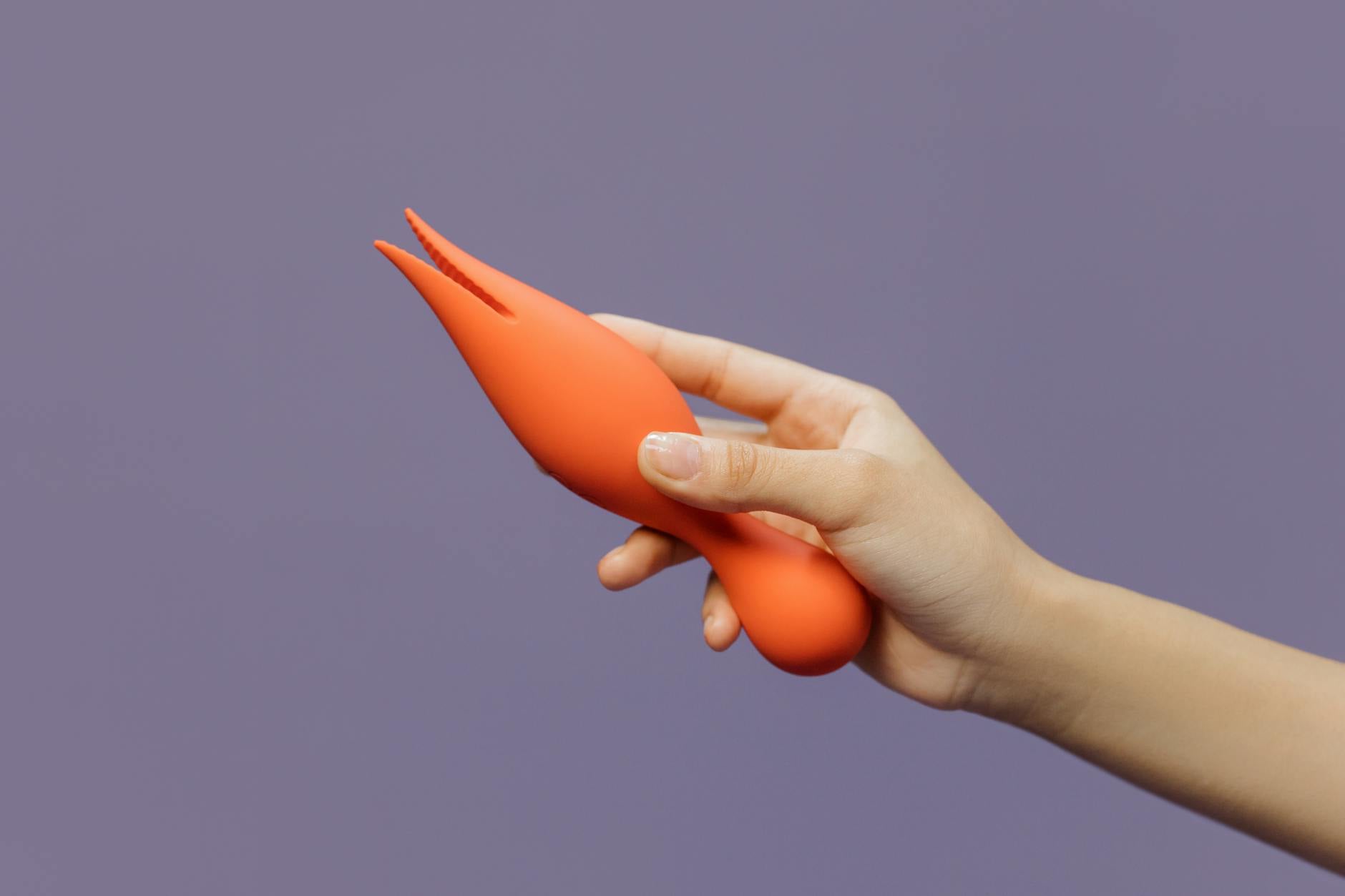
Photo by cottonbro studio on Pexels
When heightened sensation signals something else
Sometimes sharper sensation is your body's way of telling you something's off.
If heightened sensation arrived suddenly alongside pain, burning, or unusual discharge, that's worth checking with a doctor. Genitourinary syndrome (GSM), yeast infections, or irritation can all show up as heightened sensation that doesn't feel good.
If the intensity is emotionally overwhelming (like you feel anxious or triggered by the sensation), this might be a good moment to pause and explore what's happening emotionally. Sensation recovery after trauma is real, and sometimes intense sensation can activate old nervous system patterns. Working with a therapist alongside your pleasure exploration is completely normal and wise.
If you're experiencing intensity with a partner and suddenly climaxing very quickly when that wasn't your pattern before, communicate that shift. Partner mismatches around sensation are easier to navigate when you name them directly.
The emotional piece nobody mentions
Heightened sensation can sometimes feel like you've lost control of your pleasure. You might worry that you'll come too quickly, or that the intensity means something's wrong.
Neither is true.
Your body is simply responding more readily to what it enjoys. That's not loss of control, that's presence. The discomfort is usually mental, not physical. You're used to a particular rhythm, and this new version feels unfamiliar.
Give yourself permission to explore at this new pace. You don't have to perform pleasure at a speed that feels foreign to you. If you want to slow down, slow down. If you want to speed up and embrace the new intensity, that's valid too.
How to track what's shifted
Know thyself. For a week or two, jot down a few notes after using your lemon vibrator.
What pattern did you use? What intensity level? How long before orgasm arrived? Did it feel good or did it feel rushed? Was there any discomfort? What was your stress level that day? Where are you in your cycle?
This isn't about performance metrics. It's about building a map of your own body's patterns. You'll quickly see if the intensity is consistent or if it tracks with specific days, stress levels, or other life factors.
FAQ: heightened sensation and lemon vibrators
Is heightened sensation permanent?
Not necessarily. Sensation often rebalances over time as your nervous system settles into its new baseline. Sometimes it stabilizes at the higher level. Sometimes it relaxes back down. Both are fine. The key is adjusting your approach while you're in the transition.
Can I still have intense orgasms if sensation feels too sharp?
Absolutely. In fact, backing off intensity with your lemon vibrator often leads to more nuanced, complex orgasms. You're giving yourself time to explore the pleasure spectrum instead of rushing to climax. That's usually better.
Should I be worried if sensation changed suddenly?
Sudden changes warrant a quick check-in with yourself. Is there a reason this might have happened (cycle day, medication change, stress decrease, relationship shift)? If you can identify the trigger, that's usually reassuring. If change arrived with pain or other symptoms, definitely talk to a doctor. Otherwise, it's usually just your body shifting.
How long does it take to adjust to heightened sensation?
Most people recalibrate within 2-4 weeks of intentionally adjusting their approach. Your nervous system is smart and responsive. Once it realizes the new intensity level is safe and pleasurable, it'll settle into it.
Can heightened sensation affect partnered pleasure?
Yes. If your body suddenly reaches climax faster than before, and you have a partner, that's worth discussing openly. Longer foreplay, different positions, or shared exploration of your new sensitivity can actually deepen intimacy. Frame it as "my body is responding even more to you," not "something's wrong."
Is there a lemon vibrator setting that's best for heightened sensation?
There's no universal answer, but many people with heightened sensitivity prefer rhythmic patterns (steady pulsing) over steady vibration. The Lem's pattern options give you space to experiment without cranking intensity. Start there.
The bottom line
Heightened sensation isn't a problem to solve. It's information your body is giving you. Your nervous system is alert, responsive, and probably telling you something good is happening, even if the intensity feels unfamiliar.
Your lemon vibrator is still your tool. You're just learning to use it at a new setting. That's not a loss of pleasure, it's an expansion of it.
If you're navigating this shift and want support working through how it affects your relationship or your own sense of self, reach out to us. We're here to help you make sense of what your body's telling you.