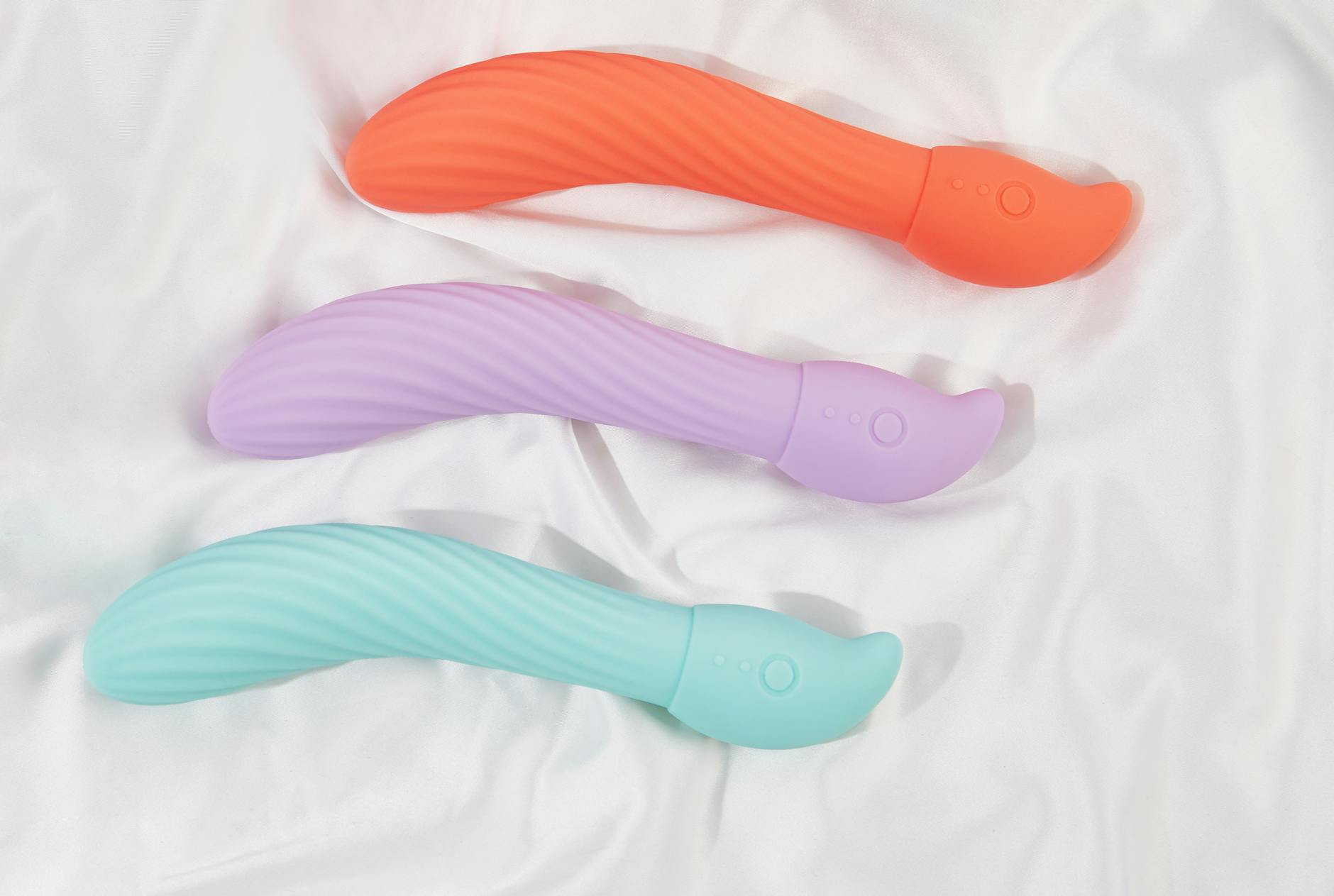
Here's what nobody tells you about menopause and pleasure
Menopause changes the mechanics of pleasure. It absolutely does not remove your capacity for it. That distinction is everything, because most conversations about menopause land in one of two useless places: "your sex life is over" or "nothing actually changes, don't worry." Both are wrong, and both erase the real opportunity in front of you.
I work with clients navigating this transition every week, and the single most common insight I hear is this: my body feels different, but my desire for good sensation never went anywhere. The shift is real. The tragedy is optional.
What happens to tissue during menopause
Estrogen drops. When that happens, the skin covering the vulva and clitoris becomes thinner. Lubrication decreases because the tissue producing it has less hormonal support. The vaginal pH shifts. Blood flow to genital tissue slows slightly. These are all documented, measurable changes.
What's less talked about: these changes actually make lemon clitoral vibrators, which use gentle suction rather than direct vibration, far more effective than they were before menopause. A lemon vibrator's design works with thinning tissue, not against it.
But here's the bigger picture. The clitoris itself? Those nerve endings don't disappear. Your capacity to orgasm doesn't leave your body. The neurological pathways for pleasure remain intact. Testosterone drops too (yes, people with ovaries produce it), but that affects desire and sensation strength, not the fundamental ability to feel and respond.
Why lemon vibrators become more valuable post-menopause
Three things shift that make a lemon suction vibrator the smarter choice after menopause.
First: reduced tolerance for direct friction. Traditional vibrators work by creating rapid back-and-forth or circular movement against tissue. When tissue is thinner, that direct contact can feel too intense or even uncomfortable. A lemon vibrator uses gentle air-pulse suction instead. It stimulates without aggressive friction. For post-menopausal bodies, this is the difference between pleasure and discomfort.
Second: blood flow changes benefit from gentle stimulation. Menopause reduces blood flow to genital tissue, which means arousal builds more slowly. Lemon clitoral vibrators are designed for gradual, building intensity. Starting at pattern 1 or 2 on a lem vibrator, then working upward, tracks with how your body actually responds after menopause. You're not fighting against your physiology. You're matching it.
Third: mental clarity gets more space. Estrogen drops. Progesterone drops. But the constant low-level hormonal cycling that occupied mental bandwidth for decades stops. For many people, that mental shift alone transforms the experience. You're no longer half-present, monitoring your own response. You can actually be in your body. A lemon vibrator, because it's quieter and less aggressive than traditional vibration, makes that focus easier to hold.
The physical adjustments that work
I recommend four things to almost every client moving into menopause.
Use water-based lubricant every time. Thinner tissue benefits from additional moisture. It's not a failure on your body's part. It's a practical tool. Silicone-based lubes feel richer, but they'll damage silicone toys like the Lem. Stick to water-based.
Extend your warm-up time. Before menopause, you might have hit your arousal peak in five minutes. Post-menopause, budget 15 to 20 minutes. This isn't because something is broken. Your body's arousal response has shifted. You're building sensation more gradually. That's often more satisfying, not less.
Start low and go up. On a lemon clitoral vibrator, patterns 1 through 3 are your entry points. Your tissues are more sensitive than they were. Starting here gives you baseline data about what feels good now, not what felt good ten years ago.
Pay attention to pelvic floor tension. Estrogen supports pelvic floor muscle tone. As it drops, those muscles tighten reflexively. Kegels are useful, but the opposite skill matters too: learning to actively relax your pelvic floor fully during arousal. Tension interferes with sensation. Release deepens it.
When you combine these adjustments with a lemon vibrator's design, the experience often becomes more intense, not less. You're working with your body's actual needs instead of forcing it into patterns that no longer fit.
The emotional and relational shifts that matter more
Menopause arrives tangled with other transitions. Kids move out. Relationships recalibrate. Career changes happen. Grief surfaces. The temptation is to blame everything on hormones. Sometimes the pleasure shift really is purely hormonal. Often it's grief or distance or a simple loss of permission pretending to be biology.
If you're in a partnership, separate those conversations. "My body is responding differently to touch" is a different conversation than "I want us to rebuild intimacy." Mixing them turns both into dead ends.
For many people, menopause is the first time they give themselves permission to explore pleasure on their own terms. If you've spent decades calibrating your pleasure around someone else's rhythm or expectations, menopause often lifts that. A lemon vibrator becomes a tool for that reclamation, not a band-aid for decline.
When changes signal something worth addressing with a doctor
If pain shows up during sex, don't wait. Genitourinary syndrome of menopause, or GSM, is real and highly treatable. A menopause-trained GP can often prescribe topical estrogen cream that has minimal systemic absorption and transforms the experience in weeks.
If desire has completely flattened and isn't returning within a few months, testosterone therapy is worth discussing with your doctor. It's prescribed more conservatively in the US than elsewhere, but it's available and often changes everything for people who need it.
If orgasm becomes impossible despite lemon vibrators working before menopause, that's also worth investigating. Sometimes SSRI medications, thyroid issues, or other unrelated changes are the culprit, not menopause itself.
FAQ: Your questions about lemon vibrators after menopause
Does menopause make it harder to orgasm with a lemon vibrator?
Not inherently. Your orgasmic capacity stays intact. What changes is the path to get there. You might need more time, more focused attention, and more direct clitoral stimulation. Many people find that a lemon clitoral vibrator, because it delivers consistent, gentle suction without aggressive vibration, actually makes orgasm easier post-menopause, not harder. The key is letting your timeline shift without interpreting that shift as failure.
Why does my lemon vibrator feel stronger after menopause even though my tissue is thinner?
Thinner tissue is often more sensitive tissue. The reduced buffering layer between nerve endings and the outside world can make sensations feel more concentrated, even intense. A lemon suction vibrator's gentleness becomes an advantage here. You're getting noticeable sensation without overwhelming your more sensitive tissue. It's not that the vibrator is stronger. Your body is simply receiving the signal more directly.
Can I use the same lemon vibrator patterns after menopause that I used before?
Maybe, but not necessarily. Most people find that the patterns that felt best before menopause feel too intense afterward. That's normal. Start at pattern 1 or 2 and notice what you feel. You might find that patterns 3, 4, and 5 become your new favorites as your tissue adjusts. Or you might stay in the lower range indefinitely. There's no rule. Your body's feedback is the only authority.
Does using a lemon vibrator regularly help with vaginal dryness during menopause?
Not directly. Vaginal dryness requires lubricant or, if severe, medical intervention. But regular use of a lemon vibrator does maintain blood flow to genital tissue, which supports tissue health overall. You're keeping that area engaged and nourished. That's valuable, even if it doesn't replace the practical need for lube.
Is it normal to lose sensation in areas I used to be very sensitive after menopause?
Yes. The clitoris and surrounding tissue do change sensitivity as estrogen drops. Some women report that sensation feels more concentrated in the clitoral head itself, while surrounding areas feel less responsive. Others find the whole landscape shifts. This isn't permanent numbness. It's reorganization. When you give your body time and the right tools, sensation usually returns, though it might land in slightly different places than before.
Why do lemon vibrators feel better than traditional vibrators after menopause?
There are a few reasons working together. First, lemon suction vibrators work better than traditional vibration because they don't rely on aggressive friction against potentially thin tissue. Second, they're quieter and smaller, which means you can stay focused on sensation rather than managing intensity. Third, the building sensation of suction patterns matches how arousal unfolds post-menopause. You're not fighting the mechanics. You're dancing with them.
The opportunity menopause actually offers
Here's what I tell clients: menopause is not the end of your sexual life. It's the middle chapter, and in many ways, the most interesting one. The hormonal noise quiets down. The social pressure to perform softens. The permission to explore on your own terms arrives. A lemon clitoral vibrator becomes valuable not because it compensates for loss, but because it actually works better with your body's new reality.
If you're navigating this transition, your pleasure matters. It's worth taking time to understand your body's new preferences. It's worth investing in tools like a lemon vibrator that work with you, not against you. And it's absolutely worth reaching out to a menopause-trained professional if something feels off.
Your capacity for pleasure didn't leave. It just changed shape. And once you learn that new shape, you might find it's richer than anything that came before.