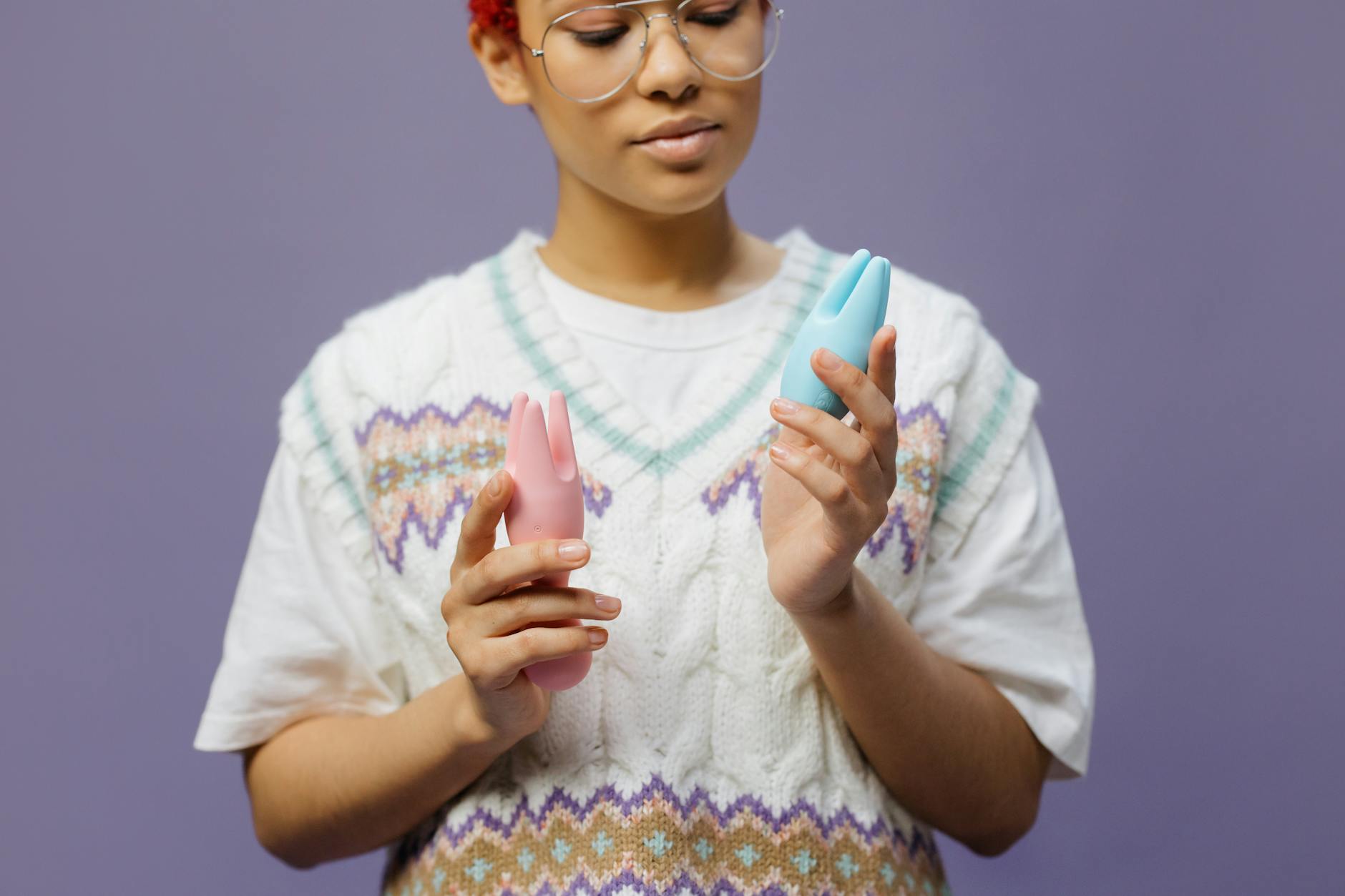
Why Does My Lemon Vibrator Feel Less Intense With Your Partner
Let's be real. You use your lemon vibrator alone and it feels incredible. Then your partner is there, and suddenly the sensation feels muted, harder to access, or weirdly distracting. You're not imagining it. Something actually changes.
The frustrating part: it's not a toy problem. It's a brain problem. And once you understand what's happening, you can work with it instead of fighting it.
The attention shift is real, not psychological
When you're solo, your nervous system is primed for pleasure. You're in control of rhythm, pressure, and timing. Your brain is focused. When your partner is present, something neurological shifts.
Your brain divides attention between three competing demands: the physical sensation from the toy, awareness of your partner, and performance anxiety (even if it's faint). That division costs processing power. Studies on how attention affects tactile sensation show that divided focus genuinely reduces perceived intensity of touch. It's not that the toy is working less. It's that your sensory system has fewer resources allocated to noticing it.
Add in any performance pressure, even low-key, and your sympathetic nervous system activates slightly. That's the fight-or-flight response kicking in at 10% volume. When your nervous system is in sympathetic mode, pleasure signals get quieter. Blood flow goes toward muscles and away from the extremities. Arousal becomes harder to access.
The partner effect on sensation
Three specific things change when another person is in the room.
1. Awareness of their awareness. You become conscious of how your partner perceives you. Even if they're being supportive and loving, part of your brain is monitoring their reactions. Are they enjoying watching? Do they look uncomfortable? This monitoring creates a quiet cognitive load that pulls resources away from sensation.
2. The loss of total control. Alone, you control everything. Your partner introduces variables you don't manage. Their breathing, their movement, their energy. This loss of control can actually help some people relax deeper (especially those with anxiety), but for many, it creates low-level vigilance. You're slightly less relaxed.
3. Positioning constraints. The angles change. Your partner's body is in space, which means you might need to angle the lemon vibrator differently, use your hand at a different angle, or position yourself less optimally. Even small positioning shifts reduce sensation. A lemon clitoral vibrator like the Lem works best when you're exactly how you want to be. Partnered sex often means compromise positioning.
Why lemon vibrators are especially affected
Traditional vibrators work through friction and speed. Your nervous system can feel them even if attention is split. Air-suction toys like lemon vibrators work differently. They create a seal and use gentle suction to stimulate the nerve endings in your clitoral tissue.
That seal requires a stable hand position and consistent contact. If your attention wavers, your body relaxes slightly, and that seal can break. It's not dramatic, but it's enough to drop the sensation from intense to merely pleasant.
Additionally, because air-suction stimulation feels qualitatively different from vibration, your nervous system needs more focused attention to register and respond to it. The brain reward signal is stronger when you're fully present.
When you're with a partner, that consistency of attention gets interrupted. Your partner moves. You shift position. You become aware of something they're doing. The seal wavers. The sensation drops.
How to actually talk about this with your partner
This is where most couples get stuck. You notice the reduced sensation and one of two things happens: you fake it to protect your partner's feelings, or you say something that sounds like blame ("I can't feel it when you're here").
Neither works. Here's the conversation that does:
Frame it as a sensory fact, not a personal failure. Try: "I've noticed my body responds differently when we're together versus when I'm alone. It's not about you or what you're doing. It's just how my nervous system works when there's another person present. I want to explore what helps."
This moves the conversation from "you're making me less pleased" to "here's what I'm discovering about how I work."
Be specific about what helps. Don't just say "I need more focus." Say: "It helps if we start with some time where you're just holding me before we bring the toy in. It helps if the lights are dim. It helps if we talk less and I can just breathe." Specificity gives your partner actionable ways to support you.
Name what's not the problem. Explicitly say: "This has nothing to do with how I feel about you or whether I'm attracted to you. My body is just wired to feel sensation more clearly when I'm not monitoring another person's presence."
Many partners worry that reduced sensation means reduced attraction. It doesn't. But they won't know that unless you say it.
Practical adjustments that usually help
Once you've talked about it, try these changes.
Start solo, then bring your partner in. Get yourself to the edge of arousal alone first. Then invite your partner to join. Your nervous system is already primed, so the divided attention hits less hard.
Reduce novelty and variables. Use the same position, same toy, same rhythm you know works alone. You're not being boring. You're removing unnecessary cognitive load so your nervous system can focus on pleasure.
Create a signal system. If you need your partner to be quieter, less active, or more passive, agree on how you'll communicate that without breaking the moment. Some couples use hand signals. Some use a simple "quieter please" without it being a big discussion.
Extend warm-up time significantly. The more aroused you already are, the less attention deficit matters. Budget 20-30 minutes of foreplay, focused on building arousal in your body, before the air-suction vibrator comes into play.
Try positions that reduce awareness of your partner. If you're facing them, you're monitoring their expression. Spooning, with the toy in your hand or their hand, often reduces that surveillance load.
The deeper relationship conversation
Sometimes reduced sensation with a partner isn't just about nervous system wiring. It can signal something else. Do you feel safe with this person? Do you trust them completely? Are you worried about what they think?
Those deeper issues won't resolve by using a better lemon vibrator or finding the right angle. They need actual conversation.
If you're noticing that how lemon vibrators help with arousal when you have responsive desire applies specifically to partnered contexts, that might be a sign your arousal genuinely needs different conditions with this partner than alone. That's useful information. It doesn't mean the relationship is wrong. It means you have specific needs that deserve attention.
My experience as a relationship coach shows me that couples who can name and solve small sensory problems like this usually do better with the bigger intimacy questions too. You're practicing how to talk about your body without shame, and that skill transfers everywhere.
The myth that you're broken
Here's what I want to be absolutely clear about: you are not broken. Your lemon vibrator is not broken. Your relationship is not broken.
Your nervous system is doing exactly what it's designed to do. It's monitoring the environment, checking for safety, and allocating resources. That's not a defect. That's your body being smart.
The fact that sensation changes in partnered contexts is so common that it's not even worth worrying about. The fact that you noticed it and want to solve it shows you care about your pleasure and your partnership. That's the right instinct.
FAQ
Why does my lemon vibrator feel intense alone but muted with a partner present?
Your nervous system divides attention between the sensation, your partner, and performance awareness. That split allocation reduces how intensely you perceive the air-suction stimulation. It's a sensory fact, not a reflection on your attraction or your relationship.
Is this normal with lemon suction toys specifically?
It happens with all toys, but air-suction vibrators like lemon clitoral vibrators require more conscious positioning and attention to maintain the seal. Divided attention affects them more noticeably than traditional vibrators, which work through friction regardless of your mental state.
How do I tell my partner the toy feels less intense when they're around without hurting their feelings?
Frame it as a nervous system fact, not a personal failure. Say: "My body processes sensation differently when you're present. I want to explore what helps both of us feel connected." Then be specific about practical adjustments. Avoid language that implies blame.
Does this mean I have a problem with intimacy?
Not at all. Most people experience some attention shift during partnered sex. It doesn't mean you're anxious or avoidant. It means your brain is doing its job of monitoring the environment. The goal isn't to eliminate that. It's to understand it and work with it.
What if the sensation is less intense even after we've talked about it?
Then you're likely hitting a genuine physiological ceiling for your nervous system in that context. That's fine. You can still have fantastic partnered sex. You might just need to adjust your expectations about sensation intensity, or you might need to spend some of your partnered time with solo pleasure, then reconnect with your partner afterward.
Can using a lemon vibrator with my partner improve over time?
Yes. The more comfortable you become with your partner, the less surveillance your nervous system does. Some couples find that after months or years, the sensation gap closes. Your nervous system learns that this person is safe and doesn't require constant monitoring. That's when partnered use often becomes easier.
What's next
If you're navigating this with a long-term partner, the conversation you have about sensation is really a conversation about trust. It's practice in naming what you need without shame. That skill matters way beyond the bedroom.
For more on how to use pleasure devices in partnered contexts, check out how to use a lemon vibrator with your partner. And if you're curious about how your body responds differently in various contexts, why lemon clitoral vibrators feel different as you age covers the longer timeline of those shifts.
Your nervous system, your toy, and your partner can all work together beautifully. It just takes honest conversation and a willingness to experiment. That's worth it.