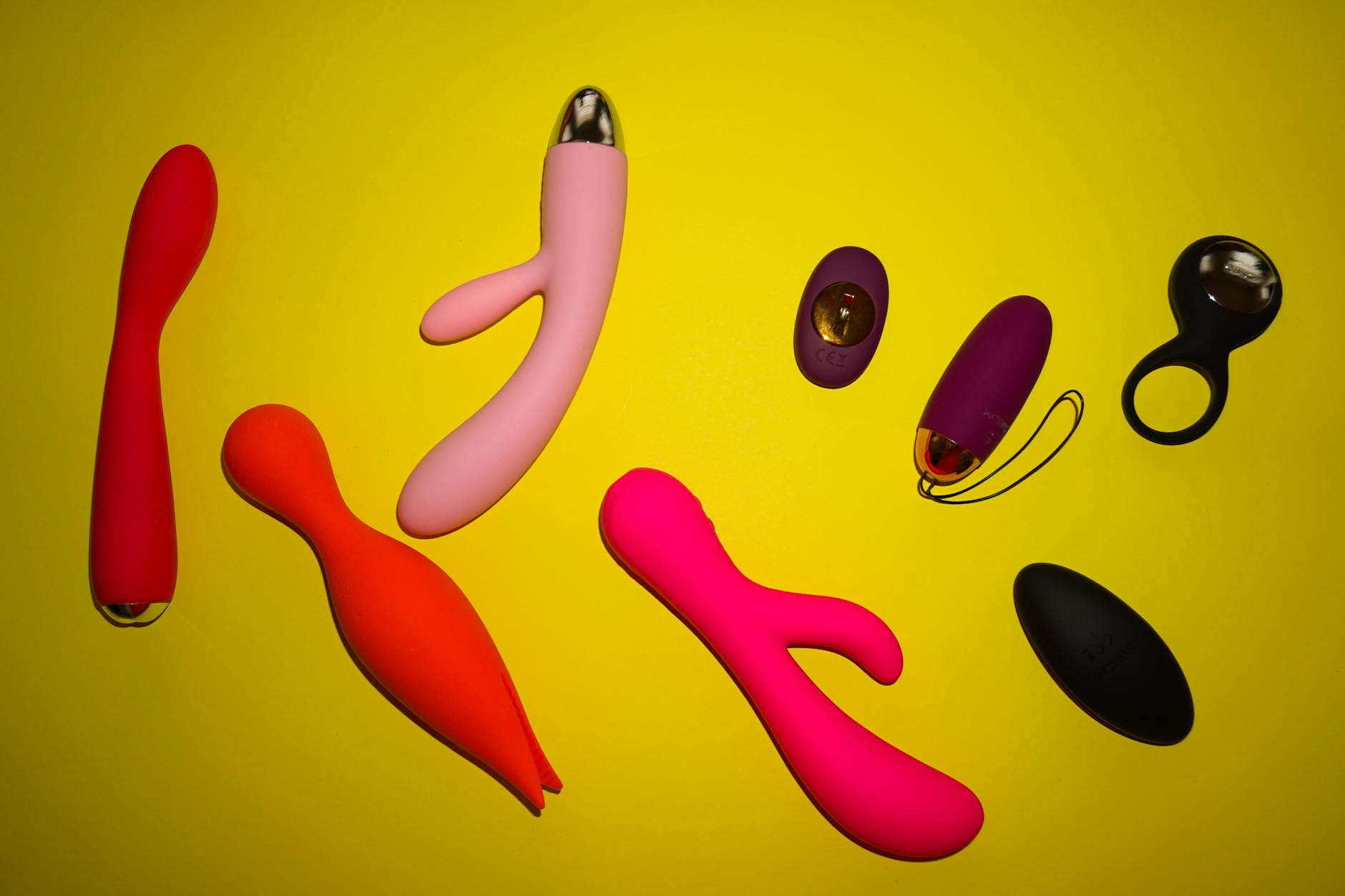
Let's be real about stress and your sex drive
Stress doesn't just make you tired. It shrinks your desire. When your nervous system is running on high alert, your brain deprioritizes sex. Cortisol floods your bloodstream. Your pelvic floor tightens. Your mind stays on the work email instead of the moment. And then you feel guilty about not feeling turned on, which creates more stress.
It's a locked loop, and most people don't know how to break it.
Here's what I've noticed working with couples navigating high-stress seasons: the ones who reconnect fastest aren't the ones who wait for stress to disappear (it won't). They're the ones who use intentional pleasure practices to signal their nervous system that it's safe to relax. A lemon vibrator is one of the most elegant tools for this because it removes performance pressure while rebuilding arousal from scratch.
How chronic stress actually changes arousal
When stress is high, your body shifts into sympathetic overdrive. Your heart rate stays elevated. Your muscles stay tense. Blood flow concentrates in your core and limbs, not your genitals. Mentally, you're running threat-detection software. Your brain is scanning for what's wrong, not what feels good.
The deeper issue: repeated activation of the stress response creates neural pathways that become automatic. Your body starts to forget what relaxation feels like. Over weeks or months, arousal doesn't just feel distant. It feels foreign.
This isn't a willpower problem. It's a physiology problem. And that's actually good news because physiology can be reset.
Why a lemon vibrator works better during stress than traditional vibrators
A traditional vibrator (bullet, wand, internal) usually requires you to already be somewhat aroused to feel good. The sensation is more intense, which can feel overwhelming when your nervous system is already maxed out. It also puts you back into performance mode: Am I supposed to come? How long is this supposed to take?
A lemon clitoral vibrator like those from Lem Hello Nancy works differently. Suction-based stimulation is gentler and more diffuse than vibration. It doesn't require intense focus to feel good. You can be 20 percent aroused and still experience pleasure. More importantly, the sensation is novel enough to pull your attention away from your stress thoughts and into your body.
During high-stress periods, that interruption is therapeutic.
The four-step protocol for rebuilding arousal during burnout
Step 1: Create a stress-free environment (this is not negotiable)
You cannot rebuild arousal in an environment where threat detection is still on. Before you touch yourself, remove sources of hypervigilance. Phone on silent. Door locked. Lights dimmed or off. A playlist that feels like permission, not performance.
I often recommend clients start with a 10-minute wind-down ritual: a shower, a cup of tea, 5 minutes of box breathing (inhale for 4, hold for 4, exhale for 4). The ritual isn't about hygiene or taste. It's about signaling to your nervous system that you've closed the door on the day.
Step 2: Start with sensation, not arousal
Don't try to get turned on. Try to notice what you feel. Begin with your lemon clitoral vibrator on the lowest setting. Spend 5-10 minutes exploring how the sensation changes when you move it slightly, when you press harder, when you move it in circles versus side to side.
This phase is about curiosity, not outcome. You're teaching your nervous system that sensation is safe. Your job is to feel, not to achieve.
Step 3: Let arousal build slowly (patience is the skill here)
Once you've spent time exploring, gradually increase intensity. Move from setting 1 to 2 to 3. Let your mind wander. Fantasies may not come easily when you're stressed, and that's okay. Some of my clients prefer to think about upcoming plans, or replay a good memory, or just focus on the physical sensations without narrative.
Arousalduring stress often doesn't feel like the lightning-bolt version you remember. It builds more quietly. It's smaller. And that's fine. Work with what you have.
Step 4: Disconnect outcome from the session
The goal during stress is not orgasm. The goal is to prove to your body that pleasure is still possible. Some sessions you'll come easily. Some you won't come at all. Both are wins because both are rebuilding the neural pathway: stress periods don't have to mean pleasure is off the table.
If you're partnered, this is a solo practice. Your partner doesn't need to be involved. You're not fixing the relationship. You're fixing your arousal system.
What changes when you're consistent (even 2-3 times a week)
After about two weeks of regular practice, most people report a shift. Arousal starts to feel faster. Your body remembers how to respond. Your mind spends less time problem-solving and more time present. Sleep often improves. And here's the part nobody predicts: your baseline stress usually decreases.
This isn't magic. It's nervous system recalibration. When you regularly signal to your body that arousal is safe, your threat detection softens. You take fewer things as a personal threat. You're less reactive.
When you're ready to bring pleasure back into partnership, you'll be bringing a turned-on version of yourself. That changes everything about how a partner responds.
Common obstacles and how to work through them
Guilt about taking time for yourself
High achievers often feel selfish for spending 15 minutes on solo pleasure when there's work to do. Here's the reframe: rebuilding your arousal system is maintenance. It's the same as sleep or eating well. It makes you more resilient, more present, less reactive. You're not being selfish. You're being strategic about your wellbeing.
Feeling nothing for the first few sessions
This is normal and common. Your nervous system is skeptical. Pleasure has felt out of reach for weeks, so your body has stopped trying. Give it time. Weeks 2 and 3 are usually when sensation starts to feel more. Don't quit in week 1.
Partner pressure or judgment
If you're in a relationship and your partner is feeling rejected or frustrated about your low libido, this protocol can actually help both of you. When you show your partner that you're actively working to rebuild arousal (not just waiting for it to come back), they usually soften. And when your libido does return, it returns faster and stronger because you're in a cooperative mindset instead of a defensive one.
When to layer in other tools
After 3-4 weeks of consistent solo practice with your lemon vibrator, you might explore adding lubricant, bringing a partner in, or trying different patterns on the device. But don't rush this. Solo practice first. Everything else second.
If stress is extreme (you're experiencing insomnia, can't focus, constant anxiety), a pleasure practice alone won't fix it. You need other support. Talk to a therapist. Adjust your workload if possible. Stress management practices like exercise or meditation matter. Pleasure rebuilding works best when you're also addressing the stress source.
The bigger picture: pleasure as stress management
Most people think of pleasure as a reward you get when life is good. But during hard seasons, pleasure can be a tool. A way of telling your nervous system that it's safe to relax. A way of reconnecting with yourself when everything else feels fragmented. A way of remembering that good feelings are still available.
A lemon clitoral vibrator from Lem Hello Nancy is designed for this exact work. The sensation is approachable. The stimulation is consistent. You don't need a partner or perfect conditions. You just need permission to feel good.
That permission, for many people, is the hardest part. But once you give it to yourself, everything changes.
People also ask
How long does it usually take for libido to return after a stressful period?
It depends on the severity and duration of the stress. If you're doing regular solo practice with a lemon clitoral vibrator and actively reducing stress sources, most people notice shifts within 2-4 weeks. Full arousal recovery usually takes 4-8 weeks. The key is consistency, not intensity. Two 15-minute sessions a week beats one desperate 60-minute session.
Can stress-related low libido mean something is wrong with my relationship?
Not necessarily. Stress kills desire across all relationship types and quality levels. That said, if stress is reduced and desire still doesn't return, that's worth exploring. Sometimes low libido points to relationship friction that stress was masking. A therapist can help you untangle whether it's external stress or internal relationship patterns.
Is it better to rebuild arousal alone or with a partner during high stress?
Start alone. When your nervous system is already taxed, adding another person's needs or presence complicates the work. Solo practice teaches your body that arousal is safe and available on your own terms. Once that's solid, partnered pleasure becomes easier and more genuine.
What if I still feel guilty or selfish taking time for pleasure during stressful seasons?
Reframe it as maintenance. You wouldn't skip sleep because work is busy. You wouldn't skip eating. Pleasure and arousal are part of nervous system health. When you tend to them, you're more resilient, clearer, less reactive. Your family, your work, everyone benefits from you feeling less stressed. Self-pleasure is generous, not selfish.
Can a lemon vibrator help if medication or hormones are also affecting my libido?
Yes, but it's one piece. If antidepressants or hormonal birth control are contributing to low desire (a common side effect), a lemon clitoral vibrator can help rebuild sensation and arousal patterns while you work with your doctor on medication adjustment. But talk to your provider. Don't assume the stress is the only culprit if other factors are at play.
How do I know when I'm ready to bring a partner back into my pleasure practice?
When you can regularly feel arousal and pleasure solo, without pressure or outcome focus. When the practice feels good instead of like homework. Usually that's 4-6 weeks in. Then you can invite your partner in slowly, starting with presence and communication before jumping back to partnered sex.
Finding your way back
Stress will come and go. It's part of life. But desire doesn't have to disappear with it. What changes is how intentional you need to be about rebuilding arousal. A lemon vibrator makes that work feel less clinical and more pleasurable.
If you want deeper support on rebuilding intimacy during life transitions, our comprehensive guide to reconnecting after extended breaks covers similar nervous system work. And if you're curious about how sensation changes under different conditions, exploring different vibrator settings can be a useful next step.
For now, give yourself permission to feel good. Your body remembers how. It just needs you to remind it.